
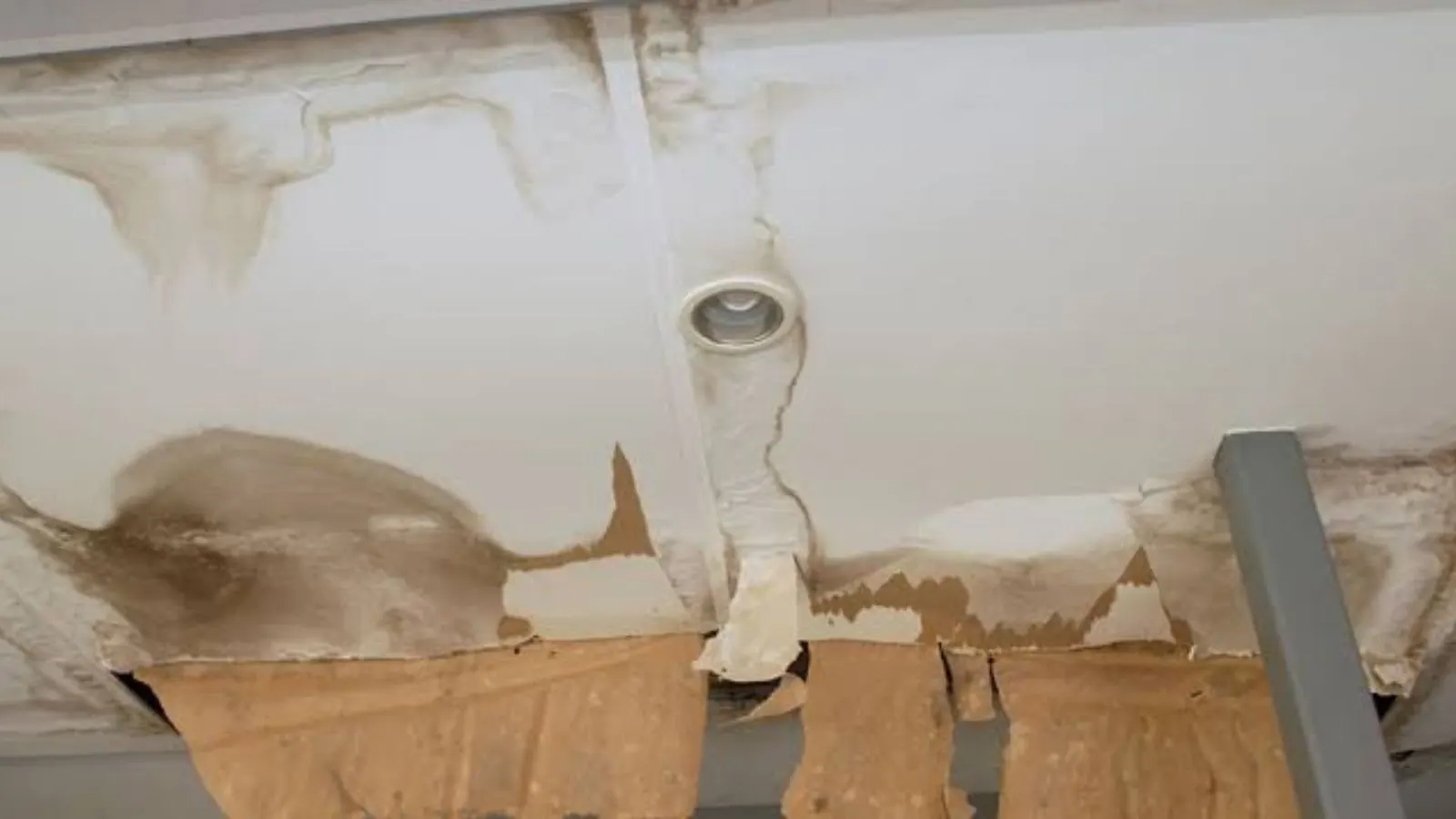
Where air conditioner water comes from
Cooling air removes moisture from it. That moisture condenses on the evaporator coil, drips into a pan and runs out through a drain line to a drain or the outdoors. When anything in that path blocks, the pan fills and spills onto whatever sits below.
The usual blockage is algae and sludge in the drain line. Other causes are a cracked pan, a disconnected drain, a dirty filter that lets the coil freeze and then melt, or low refrigerant that does the same. A frozen coil will drip heavily when it thaws, which is why the first sign is sometimes water on a dry day.
What you end up with depends on where the air handler lives. In an attic, the water soaks insulation and runs through the ceiling. In a closet or crawl space, it spreads across the floor and into the wall base. Each case calls for a different dry plan.
Why the Lithia Springs summer matters here
NOAA's 1991 to 2020 climate normals for the Atlanta Hartsfield station show about 50 inches of precipitation a year, with July among the wettest months. Hartsfield is the nearest long-record station, roughly 20 to 25 miles east, so treat it as a regional guide rather than a Lithia Springs reading. Humid summers mean your system pulls plenty of water out of the air.
The practical point is simple. Check the drain line and pan before cooling season starts, and look at the ceiling under any attic air handler if the unit has been running hard.
Spotted water near your air handler?
Turn the system off and call (943) 469-0138. The line is staffed 24/7 and a licensed and insured crew can check the moisture.
Signs your AC is leaking into the house
Stain on the ceiling below the unit
A brown ring that grows when the system runs points to a pan or drain overflow above. The patterns on the ceiling repair page show how far it can spread.
Water at the base of the air handler
A damp closet floor, swollen baseboard or a ring on the carpet means the pan or drain is not carrying the water away.
Ice on the lines or coil
Frost on the copper suction line or the coil means airflow or refrigerant is off, and the thaw will overflow the pan.
Musty smell near the vents
Moisture is lingering somewhere along the duct or air handler. It needs finding, since mold needs moisture to grow.
What to do before the crew arrives
Turn the system off
Switch the thermostat to off so the unit stops making more condensate while the drain line is blocked.
Catch the drip
Put a bucket or towels under the drip and move anything valuable out from beneath the stain.
Mind the ceiling
A ceiling that bulges holds water. Poking a small hole in the lowest point of the bulge into a bucket can relieve it, but stay clear of light fixtures and wiring.
Photograph the damage
Take photos of the stain, the unit and the drain pan before anything is cleaned up. Your insurer will ask for them.
Fixing the leak and drying what it reached
Stopping the leak and drying the house are two jobs, and both have to be finished.
Turn the system off
Switching the thermostat off stops condensate from forming and prevents more water while the cause is found.
Clear or repair the drain path
An HVAC technician flushes the line, checks the pan and fixes the coil or airflow issue. We handle the water damage and recommend an HVAC technician for the unit.
Find the wet area
A moisture meter and thermal imaging camera map wet insulation, drywall and subfloor. HVAC leaks are slow, so the damage is often broader than the stain suggests.
Dry and rebuild
Wet insulation is replaced. Air movers and LGR dehumidifiers dry framing and board, and HEPA air scrubbers run if demolition raises dust. Repairs and paint come last.
Leak size and the response that fits
| What happened | Likely damage | Usual response |
|---|---|---|
| Short overflow, caught the same day | Damp pad or pan area | Extract, dry in place, clear the drain |
| Weeks of slow drip | Wet insulation, stained ceiling | Open ceiling section, replace insulation, dry cavity |
| Frozen coil thaw | Burst of water at the handler | Extract, check wall base, run drying equipment |
| Long-term seepage in a crawl space | Damp subfloor and joists | Dry structure, check for rot, see the crawl space page |
Moisture readings, not looks, decide how far a repair goes.
Prevent a repeat: the maintenance that matters
Flush the condensate line on a schedule with a technician's advice, because sludge returns. A float switch on the drain pan or the line shuts the system down before the pan spills, and it costs little compared with a ceiling. Replace filters so airflow stays steady and the coil does not freeze.
If your air handler sits in a crawl space, the damp air and standing water can affect framing and insulation below. The crawl space water damage page covers that case, and the wall and drywall page applies when the water climbed the studs.
A drain pan under an attic unit should have its own drain or a safety switch. Without either, the first overflow soaks the ceiling below.
What moves the cost of an AC leak repair
How long it leaked
A single overflow is small. A slow drip over a season has soaked insulation and framing.
Where the unit sits
Attic leaks reach ceilings. Closet and crawl space leaks reach floors.
Materials affected
Drywall, insulation, subfloor and carpet each have a different drying or replacement path.
Drying days
Wet cavities need equipment until meters read dry.
HVAC repair
The technician's fix is separate from restoration and billed by that company.
Coverage depends on the policy and on whether the damage was sudden or gradual. Long-term leaks and lack of maintenance are often excluded, while a sudden failure may be covered, so ask your insurer before repairs. A real number for your ceiling and drain line starts with a call to (943) 469-0138.
Common Questions
Why is my AC leaking water inside the house?
Usually the condensate drain is clogged, the drain pan has cracked, or the coil froze and then thawed. Dirty filters and low refrigerant are common reasons for freezing. Turn the unit off and call an HVAC technician to fix the cause, then dry the area.
Can an AC leak cause mold?
Mold needs moisture, and a persistent AC leak provides it. We cannot say whether mold is present without testing, and testing and remediation follow the S520 standard. Georgia's health department notes there is no enforceable state standard for indoor mold work, so ask any company whether its crews work to S520.
How do I know if the water in my ceiling is from the AC or the roof?
AC water tends to appear below the unit and grows when the system runs, while roof water follows rain. A moisture map helps tell which is which. The roof leak page explains rain-driven leaks.
Will my insurance cover AC leak water damage?
It depends. Sudden damage may be covered, and gradual leaks and poor maintenance often are not. Flood is usually excluded. Check your policy, photograph the damage and ask your insurer before permanent repairs.
How long does it take to dry after an AC leak?
A small spill dries in a few days with air movers and a dehumidifier. A wet attic ceiling with insulation takes longer. Drying ends when meters match dry readings.
Do you serve Austell and Douglasville for AC leak damage?
Yes, from Lithia Springs. See Austell for the nearby area details or call (943) 469-0138.