
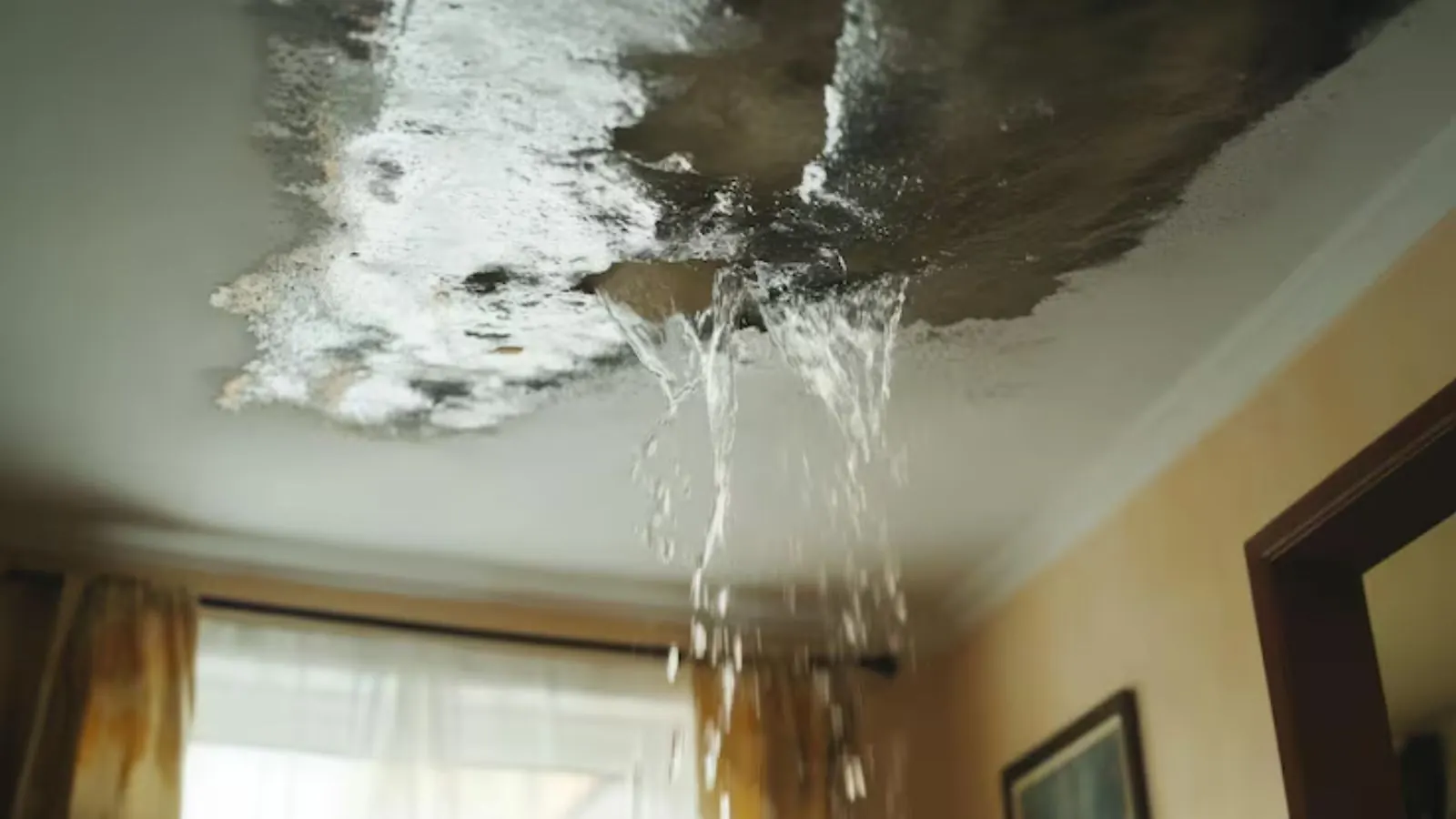
Water through the ceiling is an emergency: where roof water gets in
Water is dripping from the ceiling, and that is an emergency because the leak keeps soaking insulation and framing above you. Our line runs 24/7. While you wait, put a bucket under the drip, move furniture, and keep clear of any ceiling that bulges.
This page covers roof leak water damage in Lithia Springs, GA, which is water entering through the roof and collecting in the attic. Most leaks start at one of four weak points.
The drying that follows a roof leak is guided by the published ANSI/IICRC S500 standard for water damage restoration, and you can ask any company whether its crews work to it.
Flashing
Metal strips around chimneys, skylights and walls loosen or corrode, and water slips behind them.
Shingles
Cracked, curled or missing shingles expose the underlayment to rain.
Vent boots
The rubber collars around plumbing vents dry out and split with sun exposure.
Valleys and edges
Where two roof planes meet, runoff is concentrated and wears the surface first.
Do not go up on the roof, and mind the ceiling
A wet roof is slick, and storm winds make it worse. Leave roof work to roofers, and do not climb a ladder in rain or wind.
A ceiling that is bowed, brown or dripping heavily can hold gallons and drop without warning. Stay out from under it, switch off lights on that circuit only if the switch is dry, and call 911 or the utility if you see sparks or smell burning before you call us.
How roof water travels, and what the ceiling hides
Water follows slope and gravity, not the shortest route. It runs down the underside of decking, along rafters and over insulation before it finds a seam in the ceiling drywall.
The paint you see is only the thin outer skin of the ceiling. Behind it sits drywall or plaster, then a cavity of insulation, wiring and framing. Fixing the stain without drying that cavity leaves wet insulation pressed against the back of the board.
Drywall wicks water sideways along the paper face, so a brown ring can be far smaller than the wet area behind it. A moisture meter and a thermal imaging camera show the real edges before anyone picks up a saw. When a pipe or air handler is the source instead, see the AC leak page for condensate problems.
Ceiling dripping or sagging now?
Call (943) 469-0138 and a dispatcher will send a crew while you contain the water.
Stopping the spread right now
Catch and contain
Put a bucket or tub under the drip, and lay plastic on floors. Never stand under a bulging ceiling.
Photograph the damage
Take photos of stains, drips and the roof from the ground before cleanup begins.
Call the line
Call (943) 469-0138 and tell the dispatcher where the water is, how long it has been leaking and whether the ceiling has dropped.
Call a roofer
Roof repair or temporary covering is a roofer's trade. Restoration crews dry the inside while the roof is being fixed.
What a wet ceiling looks like, stage by stage
Each sign points to a different amount of water. Read yours before you decide how much of the ceiling has to open up.
Tan or brown ring
Water has reached the paper face and carried minerals and dust with it. The board may still be firm, but the ring grows each time the leak runs again.
Sag or bubble
The gypsum core has absorbed enough water to lose strength and the board holds a pocket of liquid. Treat a bulge as a load that can drop.
Active drip
Water is still arriving. A bucket buys time, but the source has to be found and stopped before any repair holds.
Peeling paint or a musty smell
Moisture has been present for a while. The cavity above is likely still damp, and the insulation needs checking.
Stain, sag or drip: what each stage means for the repair
| What you see | What it usually means | What is done |
|---|---|---|
| Dry, faint stain | An old leak that stopped | Meter check, seal with stain blocker, repaint |
| Damp ring that grows | Intermittent leak above | Find source, open a small inspection hole, dry the cavity |
| Sagging section | Saturated board | Support, cut out the wet section, replace insulation as needed |
| Dripping or broken open | Large release of water | Control the water, remove board, dry framing, rebuild |
A meter reading, not appearance, decides which row fits your ceiling.
Signs of a hidden roof leak
Not every leak drips. These signs show up after water has been in the attic a while.
Brown rings on ceilings
Rings that grow after rain show repeated wetting from above.
Peeling paint at the top of walls
Water running down inside a wall lifts paint near the ceiling line.
Musty attic air
A stale smell in the attic or upstairs hall points to damp insulation.
Daylight or stained decking
Look at the underside of the roof deck for dark streaks or staining.
What local weather and older housing mean for roofs and ceilings
NOAA's 1991 to 2020 climate normals for Atlanta Hartsfield, the nearest long-record station, record 50.43 inches of precipitation a year. A roof here gets tested all year, and old roofs on Lithia Springs homes built mostly between 1940 and 1980, as Douglas County's plan describes, are well past their first life.
FEMA lists Douglas County in the Hurricane Irma declaration in 2017 and an emergency declaration for Hurricane Helene in 2024. After any major wind and rain event, check your attic and ceilings within a day or two, because slow leaks often appear after the storm has passed.
Douglas County's Lithia Springs Small Area Plan says most housing in the community dates from about 1940 to 1980. Ceilings in homes of that age may be plaster, heavily textured drywall or patched several times, and each one behaves differently when wet. Ask the crew how an old textured finish will be handled before anyone sands or scrapes it, since some older coatings call for testing first.
Rebuild work can need a permit. Douglas County Building Permits and Inspections issues building, electrical and plumbing permits, so ask the county whether your scope needs one. A contractor pulling a permit there must show a state contractor license, a business license and a driver's license.
Temporary patch or permanent repair
| Stage | Who does it | Why it matters |
|---|---|---|
| Catch the water inside | You, then restoration crews | Limits what the ceiling and insulation absorb |
| Cover or patch the roof | A roofer | Stops new water from entering during the next rain |
| Dry the attic, ceiling and walls | Restoration crews | Removes moisture that stays after the rain stops |
| Replace roofing and finishes | A roofer, then a painter or drywall finisher | Restores the building once it is dry |
Doing the first step and calling the second and third quickly protects both the structure and an insurance claim.
How a wet ceiling is dried and rebuilt
The order of work matters more than the speed of the paint crew.
Map the wet area
A pin and pinless moisture meter plus a thermal imaging camera mark where the board, insulation and framing are wet. The map decides how much comes out.
Open and remove
Sagging board is supported or cut away from the side, so it cannot fall on anyone. Soaked insulation is bagged out and sound insulation is kept dry.
Dry the cavity
Air movers push air across the opened framing while an LGR dehumidifier pulls moisture out of the room. Meters are read each day until the framing matches a dry reference reading.
Rebuild the surface
New board is hung, taped and floated, then texture is matched, primed and painted. Painting the whole ceiling plane avoids a visible patch edge.
The drying stage follows the same method described on the structural drying and dehumidification page. Walls that took the runoff are covered on the drywall page, and wind-driven rain through windows and siding is on the storm damage page.
Patch, cut out or replace: the honest trade-offs
A patch is quick when the board is stained but firm and dry. The risk is painting over a damp cavity, which is how a small stain returns in a month with a smell attached. Stain blocker hides color and does nothing about moisture.
Cutting out the wet section keeps the sound ceiling and removes the damaged part. Seams show unless the texture is matched, so ask how the finish will blend. Replacing a whole room ceiling costs more labor but gives one uniform surface, and it makes sense when the sag spreads over several joists.
Insulation is its own decision. Wet fiberglass that stays compressed holds water against the board, so it usually comes out. Dry batts above a small stain can often stay.
What moves the price of roof leak and ceiling cleanup
No honest number exists until someone has measured the moisture. These are the factors that set it.
Attic and ceiling area wet
More insulation, framing and board means more removal and drying. A single sag is small, a soaked ceiling across two rooms is not.
Water category
Clean supply water is simpler than roof runoff that passed through dirty insulation. Higher categories mean more material removed.
Leak duration
Slow leaks over weeks soak deeper than a single storm and leave the cavity damp for longer.
Ceiling material and access
Smooth drywall, heavy texture and plaster each need different skill to rebuild, and tight attic hatches add labor.
Drying days and rebuild scope
Equipment runs until readings are dry. Tape, texture, primer and paint for a patch, a section or the full plane change the labor a lot.
Sudden and accidental damage, such as a pipe that burst above the ceiling or a storm that tore off shingles, is often covered, while a slow leak left for months often is not. The Georgia Office of Commissioner of Insurance advises photographing damage first, making temporary repairs and holding off on permanent repairs until the insurer has inspected, so check your policy before closing the ceiling back up.
Roof repair itself is a roofer's trade. Want your real number for the inside work? Call (943) 469-0138 and describe the stain, and the crew will explain scope and price before work starts.
Common Questions
Do you handle roof leak emergencies at night or on weekends in Lithia Springs?
Yes. Rain does not keep office hours, so dispatch is open overnight and on weekends. Same-day response is offered when available. Call (943) 469-0138, set a bucket under the drip and move anything valuable out of the way while you wait.
Do you repair the roof itself?
The line focuses on the water damage inside. Roof repair is a roofer's trade, so arrange that separately and tell the dispatcher what is happening so drying can start.
Can I just paint over a water stain on my ceiling?
Only after a moisture meter confirms the board and the cavity above it are dry. Paint over a damp ceiling traps moisture and the stain comes back, often with a smell. The same rule applies on vertical surfaces, covered on the wall and drywall repair page.
Will my ceiling collapse from a roof leak?
A sag, a bubble that moves when pressed or a split seam means the board is holding water and has lost strength, and it can drop with little warning. Keep people out from under it and do not poke it from below. Call the 24/7 line and the crew can support or release it safely.
Does a ceiling water stain mean there is mold above it?
Not always, but mold needs moisture, and a ceiling that stayed wet gives it that. Nobody can diagnose it by looking at a stain. Mold work and testing follow the published ANSI/IICRC S520 standard, and health questions belong to a physician. Georgia's health department says indoor mold work has no enforceable state standard, so ask any company whether its crews work to S520.
How long does a wet ceiling take to dry?
A small cavity often dries in a few days with air movers and a dehumidifier running. Thick insulation, plaster or repeated wetting adds time. The finish work only starts after meter readings match a dry reference.
Is roof leak and ceiling damage covered by insurance?
It depends on the cause and your policy. Sudden storm damage is often covered, while gradual leaks and wear often are not, and flood damage is usually excluded. Photograph everything, then ask your insurer before permanent repairs begin.
Do you serve Austell, Douglasville and Mableton too?
Yes. Crews are based out of Lithia Springs and also work in nearby towns. See the pages for Austell and Douglasville for the areas covered, or call (943) 469-0138.