
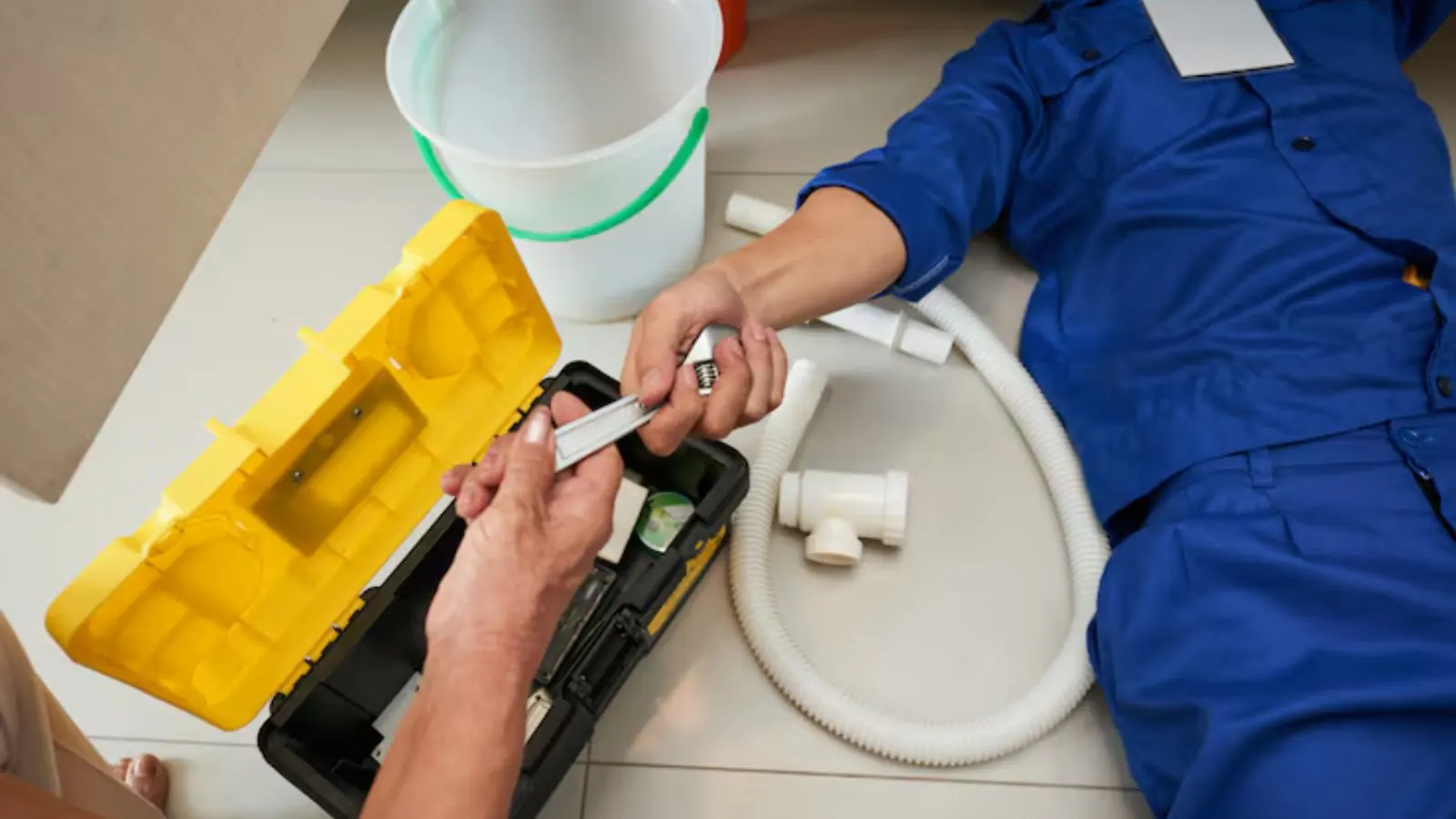
Appliance flooding right now: stop the line first
If water is coming from an appliance right now, treat it as an emergency. The 24/7 line at (943) 469-0138 is staffed around the clock, and there are things you can do before anyone arrives. Close the small shutoff valve behind or beside the appliance, or turn off the main water valve if you cannot reach it.
Unplug the appliance only if the outlet and the floor around it are dry, and otherwise leave the breaker alone until the area is safe. Pull rugs, mats and anything stored on the floor. Keep children and pets out of the wet room, since a kitchen floor that is slick with water is also an electrical risk.
Which appliance leaked decides what the water is
Not all appliance water is the same. The source sets the contamination level, and that sets how much material has to be removed.
Washing machine
Supply hoses carry clean water under line pressure and can empty a lot in a short time. A drain hose or standpipe backup brings dirtier water that includes soap and lint.
Dishwasher
Door gasket, supply line and drain loop are the usual failure points. Greasy food water leaking into the cabinet base is dirtier than clean supply water.
Refrigerator and ice maker
A thin plastic or copper line behind the unit can drip for weeks inside the wall or under the floor. Hidden seepage here is a frequent cause of a soft spot in kitchen flooring.
Condensate or drain line
Dehumidifiers, a humidifier and a utility sink pump can overflow when a drain clogs. The volume is smaller but it may go unseen.
Appliance still leaking?
Close the valve and call (943) 469-0138. Same-day response is offered when available, and the line is open all night.
What Georgia's insurance office says about appliance overflows
The Georgia Office of Commissioner of Insurance publishes a homeowners guide that says water damage from an overflowing washing machine or dishwasher normally will be covered. That is general guidance, and your own policy wording, deductible and exclusions decide your claim. Read the policy and ask your insurer before you assume either way.
The same office tells policyholders to document damage with photos or video, make temporary repairs and keep receipts, and not to make permanent repairs before the insurer has inspected. So photograph the appliance, the hose and the floor before cleanup, and ask the crew to leave wet material in place long enough for your claim photos if you can safely allow it.
From the first call to a dry kitchen or laundry room
Stop and survey
Crews confirm the valve is closed, check for electrical hazards and use a moisture meter and thermal camera to follow water under cabinets and into walls.
Extract
Extraction units pull standing water from hard floors and carpet. Toe-kick panels come off so water trapped under cabinet bases can be reached.
Dry
Air movers blow into wall bases and cabinet voids, often through small drilled holes, while LGR dehumidifiers pull moisture from the room. Readings continue until framing and subfloor are dry.
Restore
Wet insulation, pad, particleboard and swollen trim are replaced. Floor coverings, cabinet bases and paint are repaired last, after drying is confirmed.
Water category by appliance, and what that changes
| Appliance | Typical category | Effect on cleanup |
|---|---|---|
| Washer supply hose | Category 1 | Dry in place when caught early |
| Washer drain backup | Category 2 | Porous material often removed |
| Dishwasher leak | Category 1 to 2 | Cabinet base and pad often replaced |
| Fridge line, found late | Category 1 turning 2 | Subfloor and flooring checked closely |
Categories follow the ANSI/IICRC S500 water standard. Ask any company whether its crews work to S500.
Dry in place or tear out: choosing with care
Appliance leaks sit in tight spots, so the question is usually what must come out to reach the water. Solid wood cabinets and tile often survive with a good dry. Particleboard cabinet bases swell, crumble and rarely recover, and laminate flooring that has cupped is generally replaced.
Hardwood is the hard call. A fast extraction and drying can save planks, and a slow one leads to cupping across the room. The deciding factors are covered on the hardwood floor damage page, and the cabinet-heavy room is addressed in kitchen water damage restoration.
Be wary of any plan that only dries the surface. Water travels along joists and under toe-kicks, and a dry-feeling floor can hide a wet subfloor for weeks.
Power, hot water and gas lines near wet appliances
Electric ranges, dryers and many gas appliances sit in the same rooms as the plumbing. If water has reached an outlet, a range cord or the breaker box, stay out and call 911 or your electric utility before you call the restoration line. If you smell gas, leave and call from outside.
Cut power only when you can reach the panel on dry floor. Never reach behind a wet appliance.
What shapes the cost of an appliance leak job
How long it leaked
A sudden hose burst found immediately is smaller than seepage that ran for weeks.
Rooms and floor types
Tile, vinyl, hardwood and carpet each dry differently.
Cabinets and walls
Cabinet bases and wall cavities need access, and opening them adds labor.
Water category
A clean hose differs from a drain backup, and the higher category raises removal.
Drying days
The more material that is wet, the more equipment time and monitoring visits.
Sudden and accidental damage is often covered and gradual seepage often is not, so ask your insurer how it classifies yours. Tell the dispatcher which appliance failed and you can get a real number on (943) 469-0138.
Common Questions
Do you handle appliance leak emergencies at night or on weekends in Lithia Springs?
Yes. A washer hose does not wait for Monday, so the line runs around the clock and crews go out on weekends and holidays too. Same-day response is offered when available. Call (943) 469-0138 and tell the dispatcher which appliance and which room. Crews also reach Mableton and nearby towns.
My washing machine hose burst. Is the water clean?
A supply hose carries clean water, so it starts as Category 1. If the water soaked into carpet pad and sat for a day or two, it can be treated as more contaminated. Speed and the material it soaked decide what has to be removed.
How do I know if my dishwasher or fridge line has been leaking for a while?
Look for a soft or discolored spot in the floor near the unit, a musty smell, swollen cabinet base or flooring that cups or lifts. A moisture meter finds seepage that the eye misses. Also check your water bill for an unexplained rise.
Can I leave a leaking appliance plugged in?
Only if the outlet and floor are completely dry. If any water is near the outlet, stay away and have the power cut at the panel from a dry position, or call the electric utility. Never reach behind a wet appliance.
Is an appliance leak covered by insurance?
Often, for a sudden failure, and the Georgia insurance commissioner's homeowners guide says overflow from a washer or dishwasher normally is covered. Policies differ, and long-term seepage is often excluded. Ask your insurer and keep photos, receipts and the failed part.
How long until my kitchen floor is dry?
Most appliance leaks need several days of equipment, longer if water got under cabinets or thick subfloor. The timing depends on how wet it was and how fast drying started. Read the logged meter numbers rather than trusting how the floor feels.