
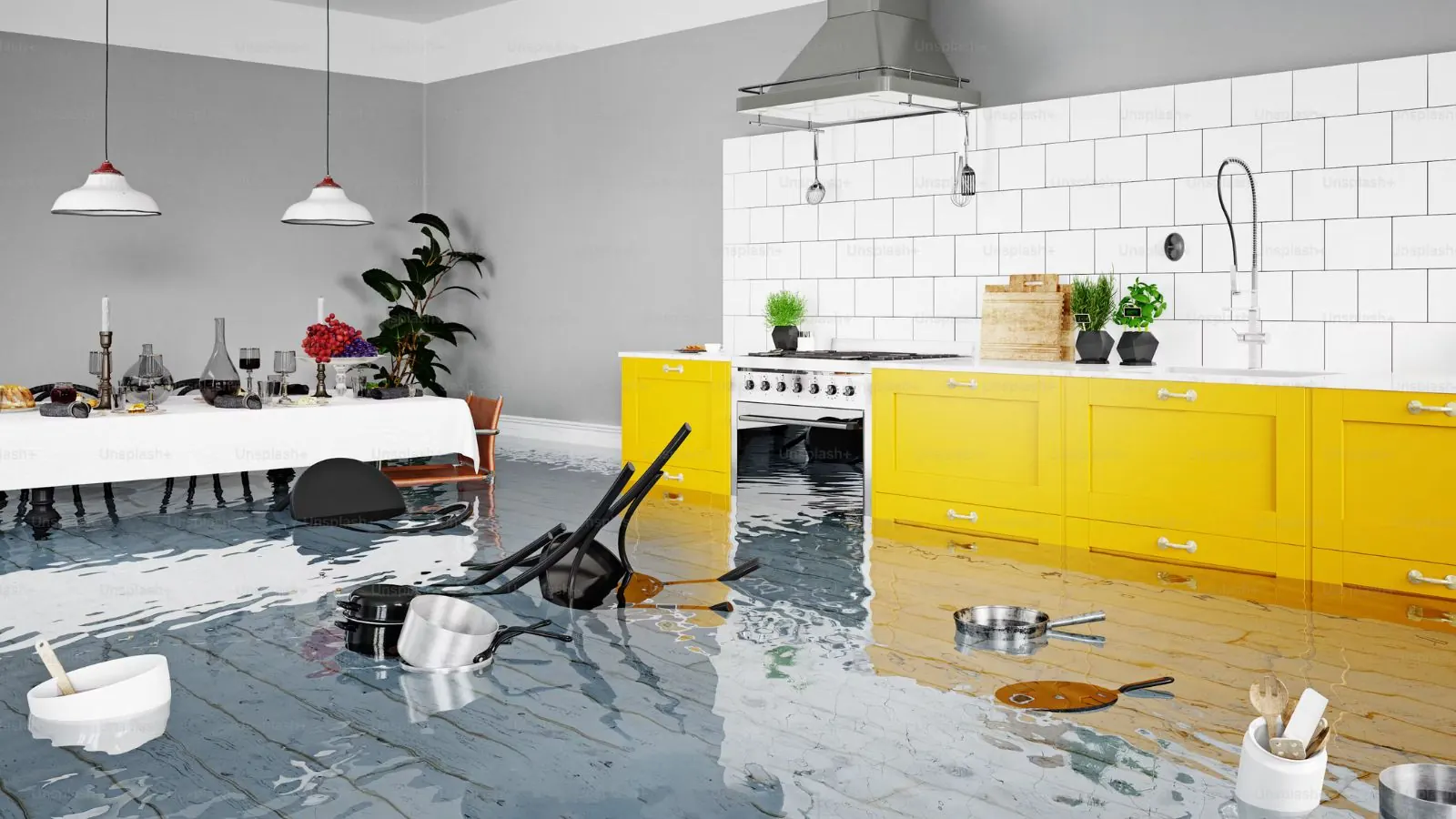
Water in a kitchen goes where you cannot see it
Kitchen water damage restoration in Lithia Springs, GA is mostly a hunt for water that has left the puddle behind. A dishwasher hose lets go, a sink trap drips for a week, or a freezer line splits, and the water slides under cabinet bases and into the subfloor before anyone notices. The mess on top of the floor is often the smaller part of the loss.
If the leak is still running, close the shutoff valve under the sink or the main valve, then call (943) 469-0138. When the source is the appliance itself, our page on appliance leak water damage explains the failure points, while this page stays with the room and what has to be dried, opened or replaced.
Four pockets where kitchen water settles after the surface looks dry
Moisture follows gravity first and capillary action second, so these are the places a crew checks before saying a kitchen is clear.
Inside the sink base
Particleboard floors in sink cabinets swell like a sponge. Swelling that you can press with a thumb means the board has lost most of its strength.
Behind the toe kick
That narrow recessed strip hides a dark, closed cavity where water pools and dries slowly. It is the first panel removed on most kitchen jobs.
Under the dishwasher and refrigerator
Both sit on top of the flooring, so water can run beneath them and stay for days. A slow drip here soaks the subfloor without leaving a stain in the room.
Between flooring layers
Many older kitchens carry vinyl over vinyl over plywood. Each layer holds water against the next, which stretches drying time.
Water under the cabinets right now?
Shut the valve, lift anything off the floor and call (943) 469-0138. Our 24/7 line is staffed whenever the sink lets go.
How a wet kitchen is worked from the source to the subfloor
The sequence below is the general order of work. The exact scope depends on what the readings show once the room is opened.
Confirm the source is off
The crew checks supply lines, drains and the dishwasher connection, then photographs the damage. Documented damage helps if you file with your insurer.
Map the moisture
A pin moisture meter reads wood and drywall, and a thermal imaging camera shows cool wet zones behind cabinets. The map decides what stays and what comes out.
Open the cavities
Toe kicks come off, base cabinet backs may be cut, and small holes in drywall allow air to move. Soaked flooring that traps water is lifted.
Dry and verify
Air movers push air across surfaces while an LGR dehumidifier pulls moisture out of the room. Readings are repeated each visit until they match the dry reference.
What common kitchen materials do once they are soaked
Material matters more than the amount of water. The same spill can be a drying job for one surface and a tear-out for another.
| Material | What water does | Usual outcome |
|---|---|---|
| Particleboard cabinet boxes | Swells, loses glue strength, crumbles at edges | Replace the affected boxes |
| Plywood or solid wood cabinets | Takes water slowly and releases it slowly | Often dried in place |
| Laminate countertop on a particleboard core | Core swells at the seams under the laminate | Replace if seams lift |
| Tile over a cement board or mortar bed | Tile resists water, the bed beneath holds it | Dry in place or lift sections |
| Vinyl or laminate plank flooring | Edges cup, water sits under the planks | Usually removed to dry the floor below |
Final decisions come from moisture readings taken on site, not from the material alone.
What the local housing record means for your kitchen
Douglas County's Lithia Springs Small Area Plan says most homes here were built from about 1940 to 1980, with limited infill in the 1990s and 2000s. A kitchen in a house that old has often been remodeled at least once, so new cabinets can sit on an older subfloor with extra layers beneath.
Tell the crew what you know about past remodels when you call. Extra layers change how deep the readings must go, and they are the reason a kitchen can feel dry on top while the floor below still holds water.
Dry in place, partial rebuild or full tear-out
Drying in place keeps your cabinets and costs the least in materials, but it only works when the wet parts are solid wood or sealed surfaces and the water has not sat long. A partial rebuild swaps out ruined cabinet bases or a section of subfloor and keeps the rest. A full tear-out is the choice when the water was dirty or has soaked most of the room.
A tear-out is not automatically better. Pulling sound cabinets creates dust and extra rebuild work, so a good crew explains why each piece comes out. Flooring decisions follow their own logic, and our pages on hardwood floor water damage repair and wall and drywall water damage repair cover those surfaces in detail.
What shapes the price of a kitchen water loss
No honest number exists before someone reads the moisture in your room. These are the factors that move the total.
Water category
Clean supply water is simpler to handle than a dishwasher drain backup or sewage, which needs removal of porous materials.
Cabinet and counter material
Particleboard rarely survives soaking, while plywood usually does. This is often the largest single swing in a kitchen.
Equipment days
Air movers and dehumidifiers are counted by days on site. Layered floors and closed cavities add days.
Rebuild scope
Drying is one cost and replacing cabinets, flooring and paint is another. Some homeowners keep only the drying and rebuild later.
On insurance, sudden and accidental damage such as a burst supply line is often covered, while a slow drip left for months often is not. Check your policy or ask your insurer before you decide. Scope and price are explained before work starts, and for a real number on your kitchen, call (943) 469-0138.
Common Questions
How long does a wet kitchen take to dry?
Most kitchens need several days of equipment, and layered floors or closed cabinet bases push that longer. Drying is finished when moisture readings match a dry reference, not when the room feels dry. Ask the crew to show you the readings on each visit.
Can my cabinets be saved?
It depends on the core material. Plywood and solid wood boxes frequently dry in place, while particleboard that has swollen usually has to be replaced.
Doors and face frames can often be kept even when the base boxes cannot, which keeps the look of the room.
Is it safe to run the dishwasher or use the sink after a leak?
Hold off until the source is found and repaired. Running a leaking appliance adds water to the very cavities being dried. Keep outlets and appliance cords away from standing water too.
Do crews work to a published standard?
Yes. Our crews work to the ANSI/IICRC S500 water damage standard. You can ask any company you are considering whether its crews follow S500, and what readings it will record.
Who do I call if the leak came from the public side of the meter?
The Douglasville-Douglas County Water and Sewer Authority provides water service across the county, so a leak before your meter is a call to the utility. Call our line as well if water has already entered the kitchen. Learn more about our reach on the Douglasville service page.
Do you handle kitchen floods that happen at night?
Our 24/7 line takes calls at any hour, and same-day response is offered when available. Close the shutoff, keep your feet out of standing water near outlets, and call (943) 469-0138.