
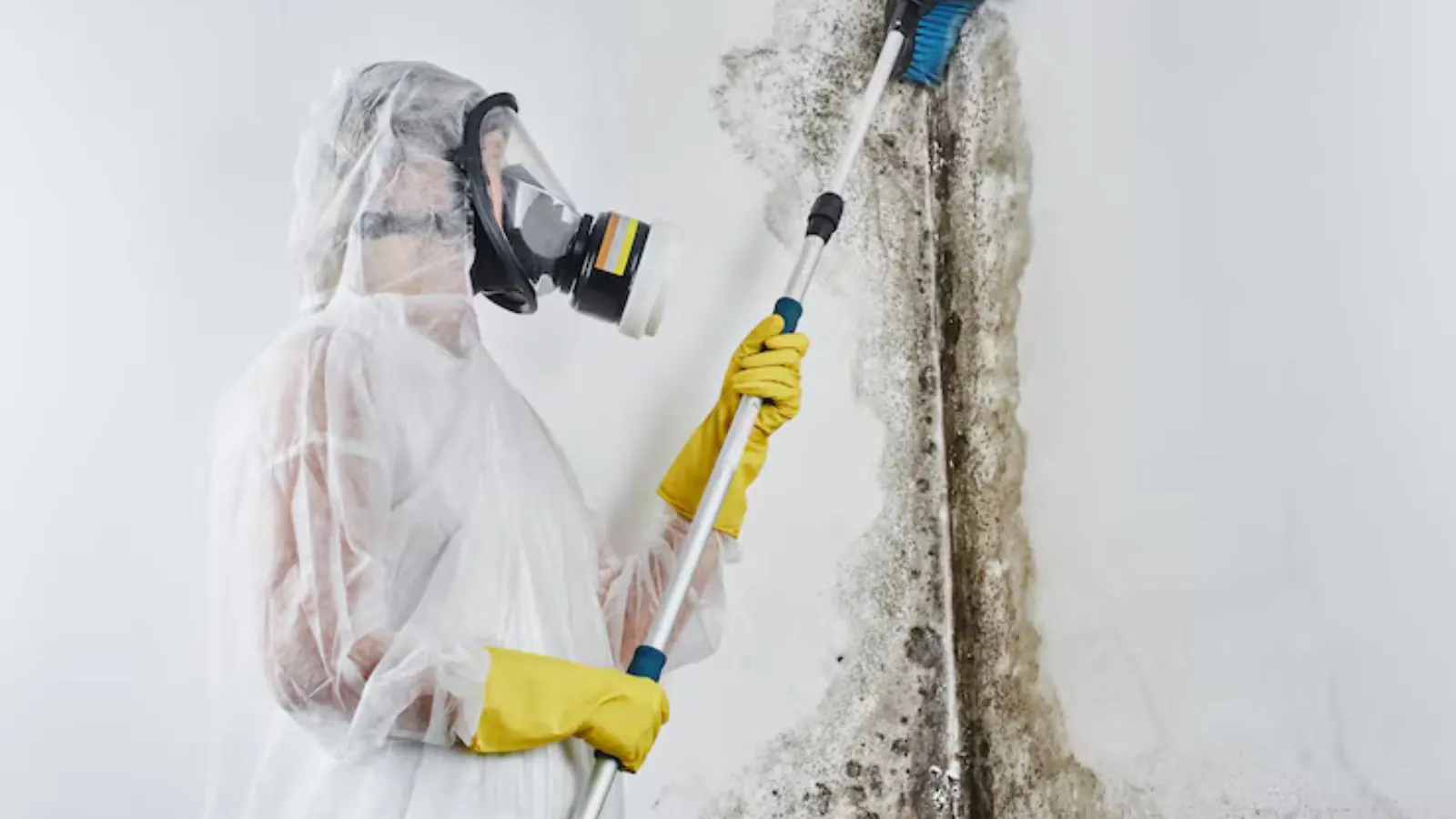
Musty smell, dark spots or a stain that keeps returning?
Those are the usual clues people describe before they search for help. A smell with no visible source, a ceiling stain that darkens after rain, or a spot behind furniture that wipes off and comes back all point to moisture somewhere in the building.
The trade name for the job that follows is mold remediation in Lithia Springs, GA. It is a defined process with containment, removal and cleaning, and it is separate from drying, which is the part that actually removes the cause. Call (943) 469-0138 and describe what you see.
What remediation is, and what it is not
Mold remediation is the controlled removal of mold growth from building materials and the cleaning of surfaces and air afterward. Crews work to the ANSI/IICRC S520 standard for mold remediation, which sets out how to contain an area, protect the rest of the home and judge whether the work is complete. You can ask any company whether its crews follow S520.
It is not a fix for moisture. Mold needs water, and without finding the source, the work is incomplete. If the cause is a leak, a drying job through structural drying and dehumidification usually runs alongside or before remediation.
Not sure what you are looking at?
Describe it by phone at (943) 469-0138 and we will explain what the next step looks like.
The remediation sequence from containment to cleaning
Assess the extent
The crew uses a moisture meter and a thermal imaging camera to find wet material and sketches the area that appears affected.
Contain the work zone
Plastic sheeting seals the area and a negative air machine with a HEPA filter keeps air moving out through the filter, not into the rest of the home.
Remove and clean
Porous material such as wet drywall and insulation is cut out and bagged. Wood and other solid surfaces are cleaned by HEPA vacuuming and wiping.
Dry and finish
Remaining materials are dried to a dry reference, then the area is cleaned again before containment is taken down.
Material by material: what gets cleaned and what gets removed
Porous materials cannot be cleaned deeply, while solid materials can. That is the logic behind most decisions.
| Material | Typical handling |
|---|---|
| Drywall and ceiling tile | Cut out and replaced if growth is present |
| Insulation | Removed and discarded |
| Carpet and pad | Usually removed |
| Framing lumber | HEPA vacuumed and cleaned, sometimes sanded |
| Concrete, metal, glass | Cleaned in place |
Final decisions come from the on-site assessment and the S520 process.
What Georgia's health department says about regulation
The Georgia Department of Public Health indoor air page says indoor air quality is not a regulated program in the state, that the branch offers no specific services for indoor mold growth, and that mold inspection, testing and remediation have no enforceable state or federal standards. We could not confirm whether any state licensing board covers mold work.
Because of that gap, ask every company whether your state licenses mold work and what it relies on instead. Ask whether its crews follow S520, who will be on site, and what the written scope says before work begins.
Questions to ask about inspection and testing
Testing is optional in many cases and its meaning is limited. A sample shows what was in the air or on a surface on the day it was taken, and results vary with weather, time of day and where the sample came from. Ask what question the test is meant to answer and who will interpret it.
A company that both tests and removes mold has a built-in interest in the result. Many homeowners prefer an independent assessor to write the protocol and review the outcome. If a test is done after remediation, ask how clearance is defined before the work starts, and ask for the report in writing.
Four questions worth asking any mold company
Do crews follow S520?
The standard is published and companies can describe how they apply it.
What is the written scope?
It should name rooms, materials to remove and how containment will be set up.
How is the moisture source handled?
If the answer is vague, the problem may return after the walls are closed.
Does the state license mold work?
Ask this directly and ask for the answer in writing if a license is claimed.
Health questions belong to a physician
We do not diagnose illness and we do not tell anyone what mold is doing to their health. If you or someone in your home has symptoms you are worried about, talk to a physician. Our role starts with the building: finding moisture, containing mold and removing damaged material.
A related cause on many jobs is water behind walls or under floors, which our pages on wall and drywall water damage repair and crawl space water damage describe from the water side.
What shapes the cost of remediation
Size of the affected area
Containment and labor scale with how much of the building is involved.
Materials involved
Drywall and insulation are removed and replaced, while framing is cleaned.
Access
Attics, crawl spaces and tight cabinets take longer to contain.
Moisture source
If water is still entering, drying or repair comes first.
Rebuild scope
Removing material is one cost and restoring walls and paint is another.
Insurance may cover mold when it follows a covered sudden loss, and gradual leaks and neglect are often excluded. Check your policy or ask your insurer. Scope and price are explained before work starts. To talk through your situation, call (943) 469-0138.
Common Questions
Why does my house smell musty when I see no mold?
A smell can come from damp material behind a wall, under flooring or in a crawl space. Moisture is the first thing to look for. A moisture meter and thermal camera can find wet material that is out of sight.
Can I remove mold myself?
Very small, surface-level spots on hard material are sometimes cleaned by homeowners. Anything larger, anything in porous material or anything that returns should be assessed first. Disturbing mold without containment can spread spores to other rooms.
Can remediation promise that mold will not return?
No work can promise that. Mold needs moisture, so the lasting protection is dry materials. Fixing leaks and controlling humidity are your part of the equation.
Do I need a test before I call?
Not necessarily. Visible growth and a moisture problem are often enough to start planning. If you want testing, ask who interprets it and consider an independent assessor.
Does the state license mold work?
Ask whether your state licenses mold work. The Georgia Department of Public Health page says mold inspection, testing and remediation have no enforceable state or federal standards, and we could not confirm a state mold license either way.
Do you work outside Lithia Springs?
Crews are dispatched from Lithia Springs to nearby communities, including those on the Mableton service page. Call (943) 469-0138 and give your address.