
The first hour: what to do while help is on the way
This is an emergency, and our dispatch line runs around the clock at (943) 469-0138. While you wait, these five minutes of work limit how far the water travels.
Close the cold supply
Turn the cold water valve above the heater clockwise. If it will not move, use the main shutoff for the house.
Cut the fuel or power
For a gas unit, turn the gas control to off or pilot. For an electric unit, switch off its breaker only if you can reach the panel on dry floor.
Lift what water can reach
Move boxes, shoes, rugs and electronics off the floor. Cardboard and carpet backing soak up water in minutes.
Photograph, then wait
Take photos or video of the heater, the water and the damage before cleanup begins. Keep children and pets out of the room.
Gas, electricity and scalding water come before the mess
If you smell gas, leave the house and call 911 or the gas utility from outside before you call anyone else. Do not flip switches in the room. Never step into standing water near a heater or panel if any outlet or cord is submerged.
Water leaving a failed tank can be hot enough to scald. Wait until the flow stops and cools before wading in, and call the 24/7 line once everyone is safe.
Why tanks fail and what the water does when they do
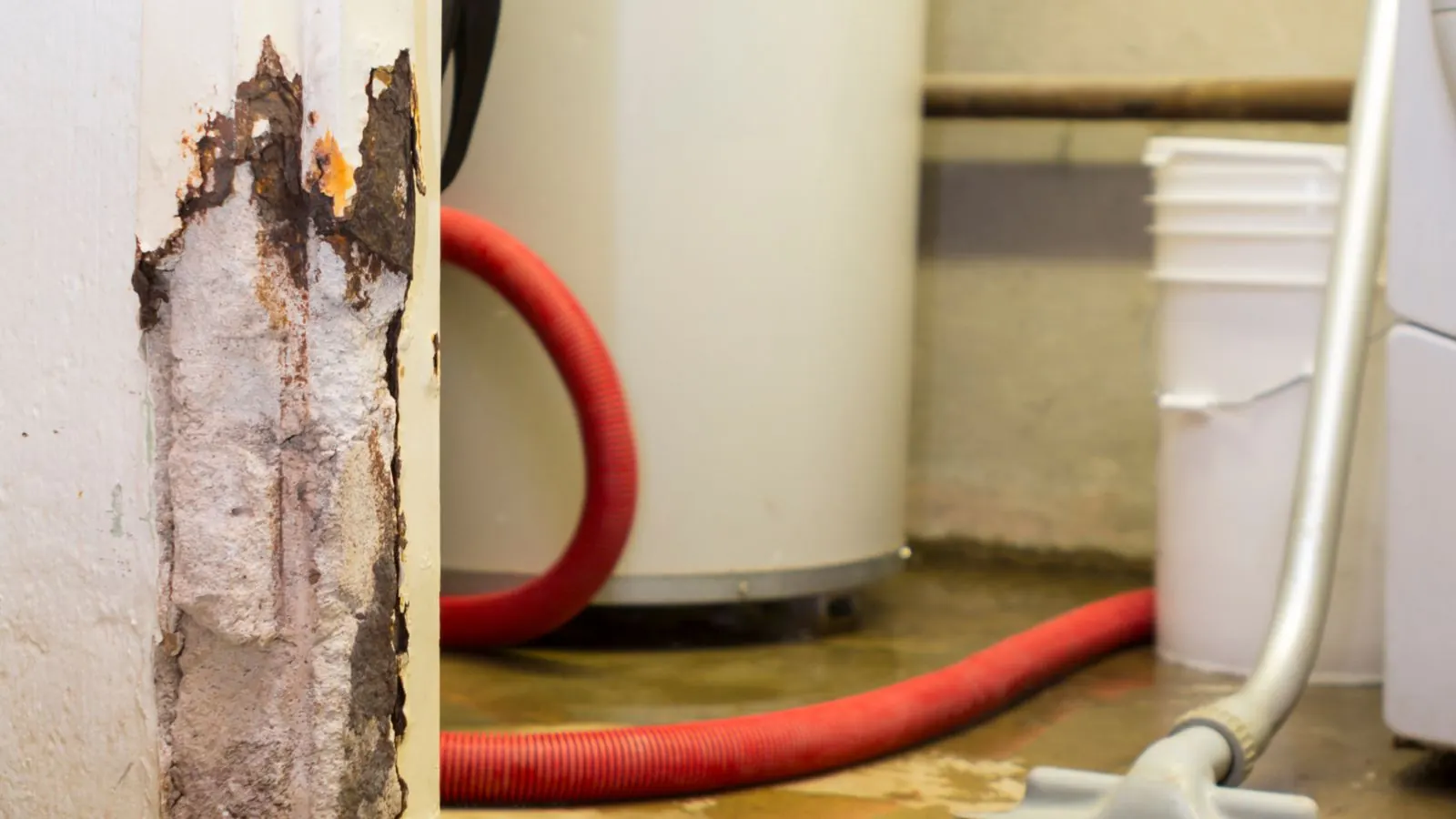
A tank water heater is a steel vessel with a glass lining and a rod inside that corrodes on purpose to protect the steel. When that rod is spent, the tank starts to rust through, usually at a seam or a fitting. A pinhole weep can run for weeks, while a full split empties the tank in a rush.
Heater leaks are usually clean supply water at the moment they begin, which is Category 1. But water that sits on flooring and soaks into drywall and carpet pad for a day or two picks up contamination and can slide toward Category 2. That is why speed matters on a water heater leak even when the water looks harmless.
Water heaters often sit in garages, closets, attics or utility rooms, which sets where the water goes. A closet unit sends water into the adjoining wall base and the carpet beyond. An attic unit sends it down through the ceiling below.
Water heater leaking right now?
Shut the cold valve, then call (943) 469-0138. The 24/7 line connects you with licensed and insured restoration professionals.
Lithia Springs water service and an older housing stock
The Douglasville-Douglas County Water and Sewer Authority describes itself as the county's sole water provider, so if your house shutoff fails, call the authority and ask about the meter valve. Know where your main shutoff is before you need it, and test that it turns.
Douglas County's small area plan says most Lithia Springs homes were built between about 1940 and 1980. Water heaters in homes of that age may have been replaced several times, with fittings of mixed age, so check the connections and the drain pan whenever the tank is serviced.
Where the heater sits decides where the water goes
| Location | Where water travels | What crews dry |
|---|---|---|
| Garage | Slab, door sill, stored boxes | Flooring edges, drywall base, stored items |
| Hall closet | Wall base, carpet and pad | Baseboards, wall cavity, carpet pad |
| Attic | Insulation, then ceiling below | Ceiling board, insulation, upper walls |
| Utility room | Vinyl, subfloor, neighbor rooms | Subfloor, cabinet bases, adjoining floors |
A thermal imaging camera and moisture meter trace the real path, which often runs further than the visible puddle.
What the crew does after the water is stopped
Extract standing water
Truck-mounted or portable extraction units pull water from hard floors and a weighted tool draws it from carpet and pad.
Remove what cannot dry
Wet carpet pad, soaked baseboard and saturated lower drywall come out when they will not dry in place. Carpet may be lifted and dried if it is salvageable.
Dry the structure
Air movers and LGR dehumidifiers run until moisture meters match dry reference readings in the walls and floor. Readings are logged daily.
Clean and sanitize
Floors and wall bases are cleaned and treated, and HEPA air scrubbers run if cutting or demolition raised dust. Repairs and replacement flooring follow.
Pulling water out of walls and flooring follows the methods described in water extraction, and wet carpet is handled by the approach on the carpet water damage page.
Repair the tank, replace it or keep an eye on it
Cleanup and the heater itself are separate jobs. A plumber decides whether a leak is a loose fitting you can tighten or a tank wall that has failed. Water leaking from the tank body means replacement, since a rusted shell cannot be patched.
If the leak is at a valve or fitting, the heater may survive, but the floor still needs drying. Skipping that step is the usual mistake. A dry-looking floor can hold moisture in the subfloor for weeks.
Whichever you choose, ask the plumber to fit a drain pan and discuss a leak sensor. Both are cheap compared with a second round of water.
What drives the cost of a water heater leak cleanup
The number depends on a short list of facts, and the crew can explain each before work starts.
Volume and time
A slow weep found in a day is a small job. A full tank across a finished room is a large one.
Rooms and materials reached
Tile and concrete dry easily. Carpet pad, engineered wood and drywall base cost more to dry or replace.
Water category
Clean water caught early stays Category 1. Water that has sat for days raises the cleanup scope.
Drying days and equipment
More air movers and dehumidifiers for more days means a larger bill.
Rebuild scope
Replacing baseboard, painting and flooring is priced after drying is finished.
Georgia's insurance commissioner notes that sudden water damage from an appliance is often covered while long-term seepage often is not, so tell your insurer what you found and when. Keep the failed part if you can.
Tell dispatch whether the tank sits on carpet, tile or slab on (943) 469-0138 for a real figure.
Common Questions
Do you handle water heater leak emergencies at night or on weekends in Lithia Springs?
Yes. Tanks often fail at night, and dispatch runs around the clock with weekend and holiday coverage. Same-day response is offered when available, and the same crews cover Douglasville. Call (943) 469-0138 and describe where the water is going so the right equipment is sent.
Is a leaking water heater covered by homeowners insurance?
Sudden and accidental release of water is often covered, while rust-through that leaked for months often is not. The tank itself is a separate question from the damage it caused. Check your policy and ask your insurer, and photograph the damage before cleanup.
How much water can a water heater release?
Most residential tanks hold 30 to 80 gallons, and the typical household unit holds 40 to 50. Even a fraction of that soaks carpet pad and runs under walls. Standing water should be removed before it wicks upward into drywall.
Can I dry the floor myself with fans and towels?
Surface drying helps for a small spill on tile. It does not reach water in pad, subfloor or wall cavities, and a home fan cannot pull moisture the way an LGR dehumidifier does. If water went under baseboards, call for a moisture check.
Should I replace my water heater before or after the cleanup?
After the water is stopped and the area is safe, a plumber can swap the tank while the drying equipment is running. Doing both at once saves a visit. Just keep the plumber off wet electrical connections.
Will wet drywall behind the heater grow mold?
Mold needs moisture and time, and wet drywall supplies both if it stays wet. Prompt drying lowers the risk but cannot promise a result. Mold testing and remediation follow the S520 standard, so ask any company whether its crews work to it, and take health questions to a physician. See mold remediation if you already see growth.