
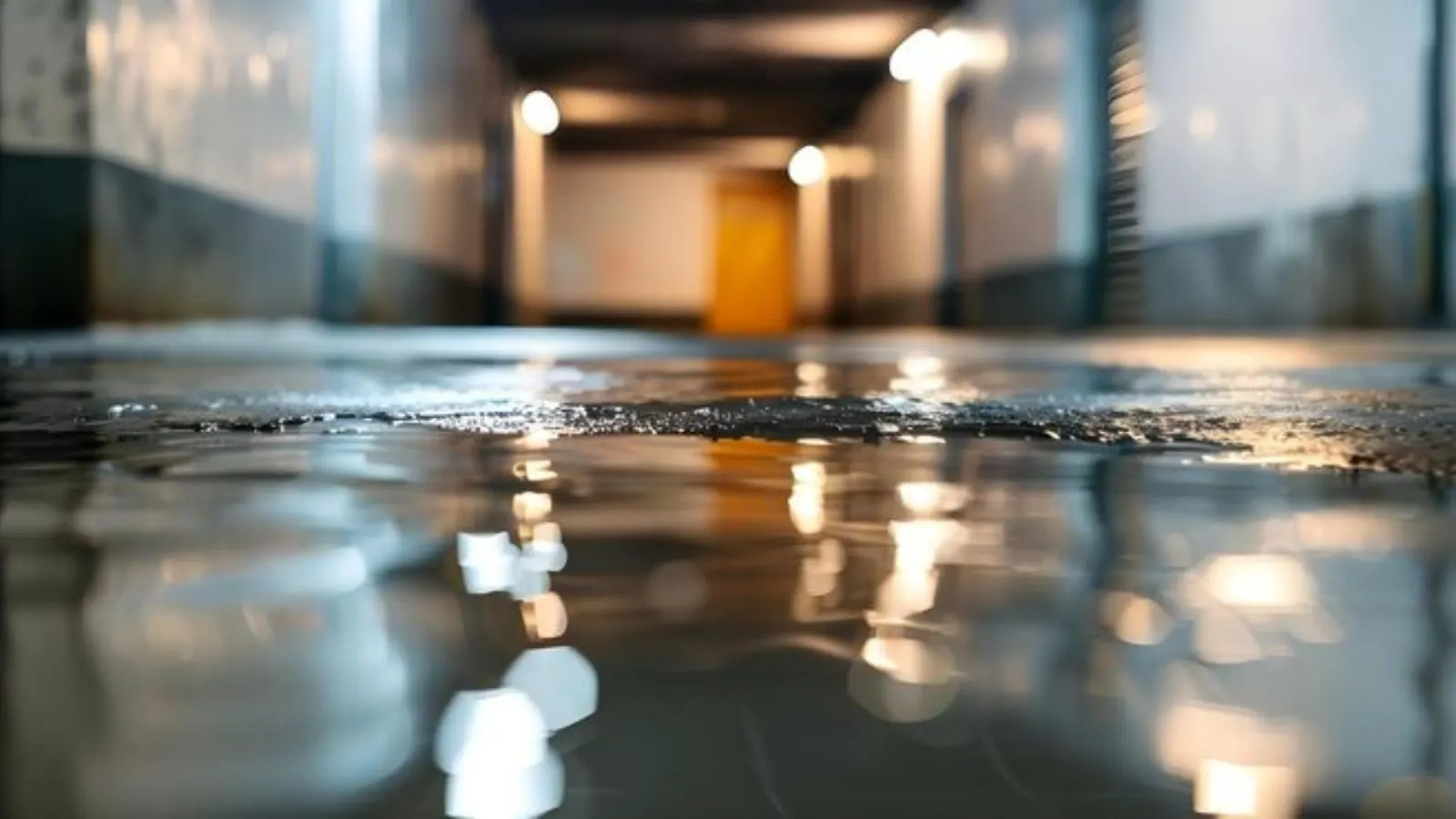
Water in a business: what to do before the crew gets there
A leak in a commercial building is urgent because it touches inventory, equipment, tenants and your ability to open. Our dispatch line is open 24/7, and standing water comes out first, see water extraction. While you wait, shut the water main or the zone valve, move inventory and electronics off the floor, and keep staff and customers out of any room with standing water.
Photograph the damage and the source before anything is moved. Write down the time you noticed it. Note which tenants or units are affected, because a building often has more than one responsible party.
Electricity, gas and fire systems in a wet building
Commercial buildings hold three-phase panels, server racks, and kitchen equipment, so water near any of them is dangerous. Cut power only if you can reach the panel while standing in a dry area. If water is on live equipment, you smell gas, or sprinklers have discharged, call 911 or the utility before you call our line.
Do not enter a room where the ceiling is bulging with water. Wet ceiling tile and drywall can drop without warning.
Business water emergency right now
Call (943) 469-0138. The line is open 24/7.
How commercial water losses differ from a house
Larger areas, flat floors
Open slabs and long corridors spread water across a wide footprint, so extraction units and air movers are needed in bulk.
Operating while we dry
Work is phased so a shop can keep selling, a clinic can keep seeing patients, or a unit can stay occupied.
Shared walls and floors
In multi-unit buildings, water travels down through floors and sideways through shared walls, so neighbors need checking.
Different materials
Commercial carpet tile, suspended ceilings, steel studs and concrete react to water differently than residential finishes.
Lithia Springs businesses and rental buildings
Census QuickFacts show about 45.5 percent of Lithia Springs housing is owner occupied, so a large share is rented and the property owner and tenant each hold part of the response. If you rent, tell the landlord or manager right away, and read your lease before you move anything.
US 78 runs through the community as the county's main commercial street, and the county plan lists a Bankhead Highway redevelopment area. Both corridors have older strip buildings and mixed-use structures. Check the age of your building's plumbing and roof before the next storm season.
How we handle a commercial loss from call to dry
Crews follow the ANSI/IICRC S500 standard. Your scope may differ.
Triage and scope
The dispatcher gathers the building type, water source and affected units. A crew arrives and uses moisture meters and a thermal imaging camera to map wetness.
Extract and protect
Extraction units clear water. Contents are moved or blocked off, and affected tile, ceiling panels and wet insulation are removed.
Dry in phases
Air movers and LGR dehumidifiers are placed to keep drying zones separate from working zones. See the structural drying page.
Document and release
Moisture logs and photos support your insurance paperwork. Rooms are released once readings meet standard.
Which kind of building has which risk
| Building type | Typical water source | What matters most |
|---|---|---|
| Restaurant or kitchen | Grease trap, supply line | Sewage risk, health inspection, see sewage cleanup |
| Warehouse or retail | Roof leak, sprinkler | Inventory, large slab area |
| Apartment or multi-unit | Supply line, appliance | Units below, shared walls |
| Office | Supply line, HVAC | Electronics, records, phased reopening |
After hours, weekends and holidays
Pipes do not break on a schedule. Crews dispatch around the clock, and same-day response is offered when available. A night call also means you can sort out downtime before opening hour. Ask the dispatcher what the first visit will cover.
Many businesses call only after the mess has been sitting a day. Do not wait, since porous finishes start to fail within the first day or two. Early calls keep the scope smaller.
What drives commercial restoration cost
Square footage alone does not set the total. Look at these.
Floor area and number of units
More wet area needs more equipment and labor.
Water category
A clean supply line costs less to fix than a drain or flood.
Building materials
Concrete, carpet tile and drywall dry at different speeds.
Phasing needs
Working around open hours or tenants adds planning.
Rebuild scope
Permits and finish work are separate from mitigation. Ask the Douglas County building department which projects need a permit.
Commercial property policies differ, and business interruption coverage is a separate line. Check your policy or ask your insurer. For a number that fits your building and your downtime, call (943) 469-0138.
Related work around a commercial job
Most commercial calls start with standing water removal, and if the source is a creek or runoff, see flood damage restoration. We also serve Douglasville businesses, see Douglasville service.
Common Questions
Do you handle commercial water damage emergencies at night or on weekends in Lithia Springs?
Yes. A break after closing is common, so after-hours calls are routine for a commercial loss. Dispatch is open nights, weekends and holidays, and same-day response is offered when available. Call (943) 469-0138 and describe the building and what is wet.
Can you work while my business stays open?
Often yes. Crews phase the work, isolate wet zones, and place equipment so part of the space stays usable. The plan depends on where the water is.
I rent my space. Who calls?
Tell your landlord or property manager first, since the lease usually sets who is responsible. Both can call our line to describe the loss.
What if the water came from a neighbor unit?
Water travels through floors and shared walls. Photograph the damage, notify management, and check your own policy. Crews can map moisture on your side.
How do you document a loss for insurance?
Crews take photos and keep moisture logs for each visit. You still file the claim yourself, and your insurer decides coverage.
How long until we can reopen?
It depends on the area, materials and readings. Phased work often lets part of a building reopen sooner, while rooms with removal or contamination wait for clearance.