
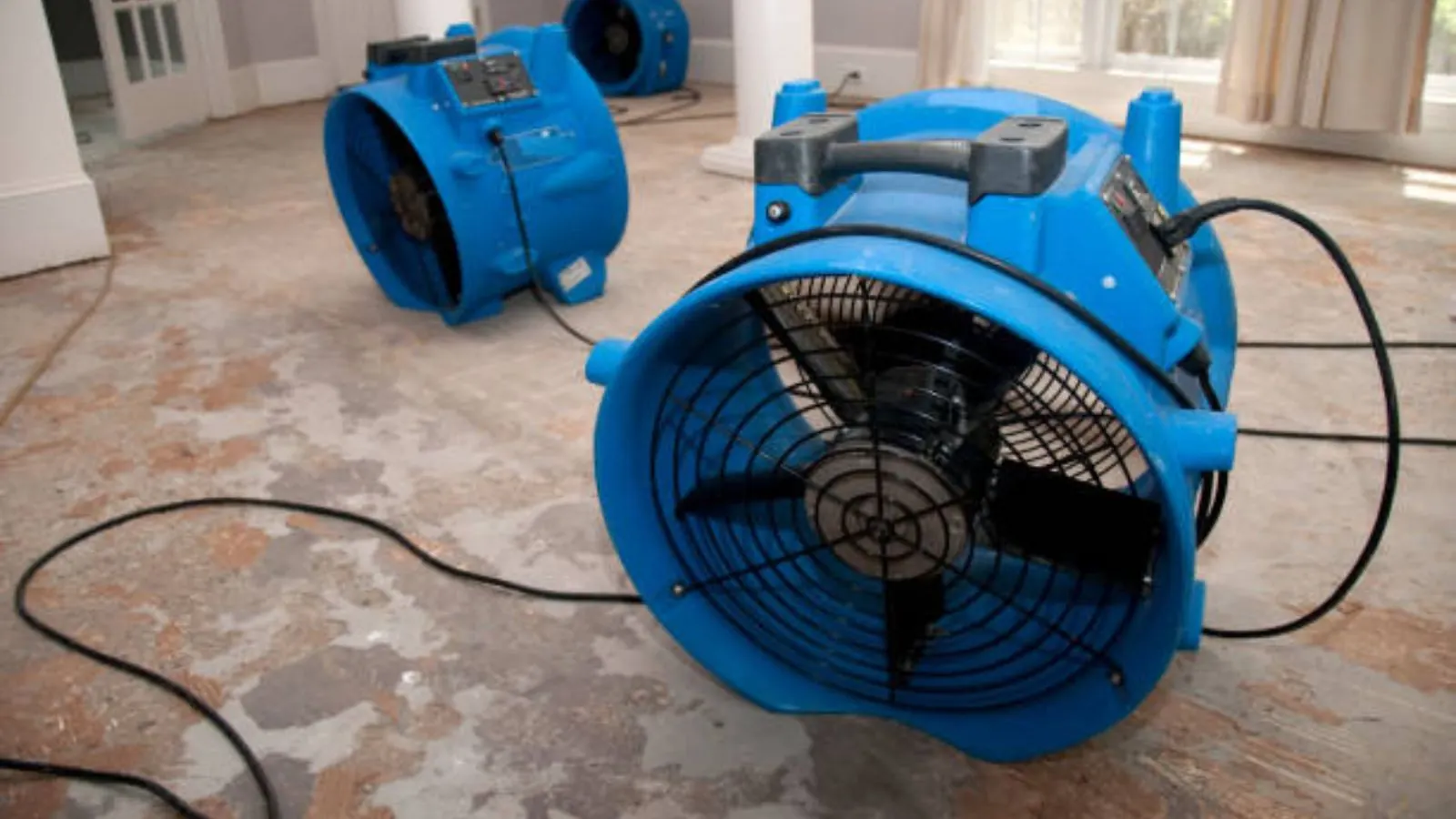
What structural drying means for a Lithia Springs home
Structural drying is the controlled removal of moisture from framing, subfloors, drywall, insulation and concrete after a water event. It runs on equipment placed to a plan and checked against readings. In Lithia Springs, GA, the plan has to fight humid air that holds more moisture than the wet wall is willing to give up.
Two things separate this work from a fan in the hallway: measurement and air handling. Measurement tells crews where water is. Air handling moves it out of the building rather than around it. Standing water comes out first, see our extraction page.
My house still feels damp, the walls are cool and the floor smells
A damp feel days after a leak, baseboards that wick a stain upward, cool wall surfaces, a smell that returns on humid afternoons: these mean the water you cannot see is still there. The walls and floors are holding it, and it only leaves as vapor.
Closing that gap is what a dedicated drying crew does. If that is your situation, the sections below describe how we find, dry and confirm it.
Still damp after the water is gone
Call (943) 469-0138 and describe what you feel and smell. The line is open 24/7.
Moisture mapping: the plan comes before the equipment
Moisture mapping is the survey that decides where every machine goes. Without it, drying is guesswork.
Scan with a thermal imaging camera
A thermal camera shows temperature patterns that suggest wet cavities. It points to areas for a direct reading, but it does not measure moisture on its own.
Probe with moisture meters
Pin and pinless meters read wood, drywall and subfloor. Readings are marked on the surface or logged on a sketch of each room.
Set a dry standard
Unaffected materials in the same house give the baseline. A wall is done when it matches that number, not when it feels dry.
Map again on each visit
The same points are rechecked, so the map shows a trend down. A stalled number means equipment is moved or a hidden source is still feeding the area.
What to do while drying equipment is on its way
Stop adding moisture
Skip the wet vacuum and the space heater. Running a heater on a wet wall can push moisture deeper into the cavity.
Open the space
Open cabinet doors and pull furniture a few inches from wet walls so air can reach the surfaces.
Leave the equipment alone
Once air movers and dehumidifiers are running, keep doors and windows closed so the room dries to the target and does not draw in humid air.
Keep a log
Write down the date and time equipment started. The daily moisture readings the crew takes become your record for the insurance file.
The equipment and what each piece does
Air movers
High-velocity fans set at an angle along walls and floors, pushing air across wet surfaces so water evaporates.
LGR dehumidifiers
Low grain refrigerant units pull water vapor out of the air so it can take on more from the structure. They matter most in damp, warm conditions.
Wall cavity and floor drying systems
Small holes or lifted baseboards let dry air reach inside a wall. Mats can pull water from under a hardwood floor.
HEPA air scrubbers
Filter airborne particles when materials are cut out or contamination is present, and they run with containment.
Why drying takes more care in a humid, rainy part of Georgia
NOAA's 1991 to 2020 normals for Atlanta Hartsfield, the nearest long-record station, show about 50 inches of precipitation a year and 3 to 5 inches in every month. Outdoor air here is rarely dry, so an open window is not a drying plan. Keep doors and windows closed during drying unless crews tell you otherwise.
The Lithia Springs Small Area Plan from Douglas County describes most housing as built between about 1940 and 1980. Older framing and plaster or early drywall behave differently when wet, so ask for readings in each material.
How long and how deep: damage level compared
| Damage level | Typical materials affected | Typical action |
|---|---|---|
| Wet surface only | Finish layers, carpet top | Extract, air movers, short monitoring |
| Wet to the cavity | Drywall, insulation, baseboards | Open cavities, dry cavity air, monitor |
| Wet through the structure | Subfloor, joists, concrete | Dehumidifiers, floor drying, many visits |
| Wet with contamination | Any porous material | Removal first, see sewage cleanup |
Days are set by the readings. Crews do not promise a fixed schedule.
Water mitigation: the term and what it covers
Water mitigation means the work that limits the damage as quickly as possible: stopping the source, removing water, protecting contents, and starting drying. Insurers use the term in policy language, and it is often your duty to do it. Georgia's Insurance Commissioner office advises that policies may require temporary repairs to prevent further damage and that you keep receipts and take photos first.
Mitigation ends when the structure is dry. Rebuilding is a separate scope that follows. Ask the Douglas County building department about permits for any rebuild.
What sets the cost of a drying job
Equipment days drive most of the total. These are the factors that change it.
Volume of wet material
More affected square footage and more layers need more machines.
Material type
Hardwood, concrete and plaster release water slowly, while carpet and drywall dry faster.
Water category
Contamination changes what is removed and what is dried.
Equipment days
Units run until readings reach standard, so duration is measured.
Access
Wall cavities and tight crawl spaces add labor to place equipment.
Sudden and accidental water events are often covered by homeowners policies, while gradual leaks and flood are often not. Check your policy or ask your insurer. Drying cost follows equipment days, so call (943) 469-0138 to learn what your rooms need.
Where drying fits in the bigger job
Drying also decides repair choices for drywall and hardwood floors. Since mold needs moisture, drying is the first defense, see mold remediation.
Neighbors in Austell call the same line. We dispatch there as well.
Common Questions
How do you know a building is actually dry?
Crews compare moisture meter readings in wet areas against a dry reference in unaffected material. When the numbers match, the area is done. Touch alone is not reliable.
My walls feel cool and damp days after a leak. What does that mean?
Cool and damp surfaces usually mean moisture is still held in the wall cavity or insulation. Cavities hide wet material. A moisture survey shows where the wetness sits and how deep it goes.
Can I use box fans and a household dehumidifier instead?
Household units move little air and pull little water compared with air movers and LGR dehumidifiers. They can help while you wait, but they rarely dry framing.
What is moisture mapping?
It is a recorded survey of moisture readings across rooms, repeated over visits. It shows where equipment goes and when drying is complete.
Will drying prevent mold?
Mold needs moisture, and fast drying removes it. No one can promise a result, and testing and remediation follow S520. Ask whether Georgia licenses mold work.
Is it loud and how long do machines run?
Air movers and dehumidifiers are noticeable but livable. They run until readings reach the dry standard, so the duration depends on materials and water category.