
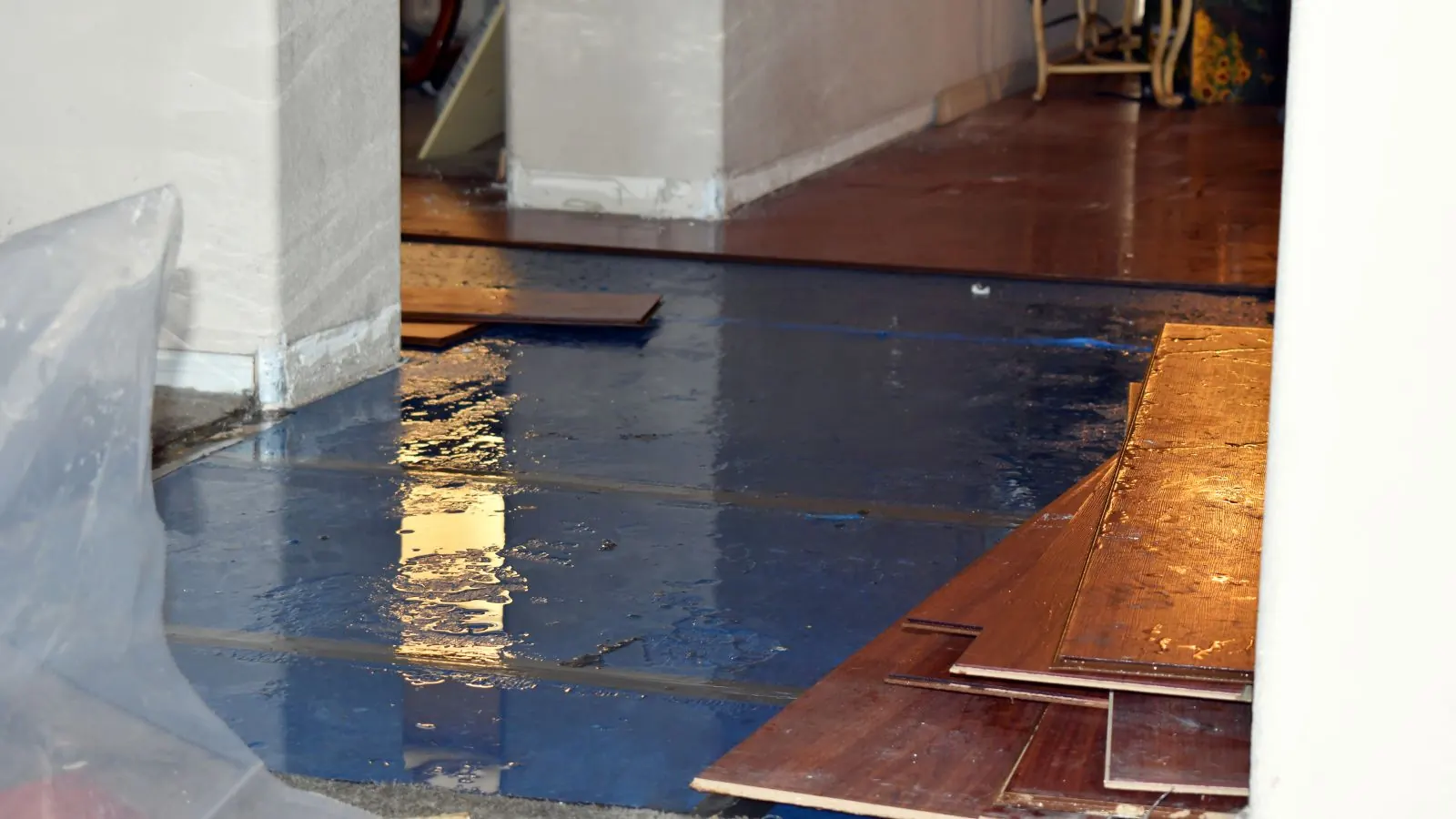
Start here: what kind of wood floor do you have?
Hardwood floor water damage repair in Lithia Springs, GA begins with identifying the floor, because the type decides how much water it can survive. Look at a board edge in a heating vent or at a threshold if you are unsure. If the water came from a supply line or a failed tank, the cause matters too, and our page on burst pipe water damage covers that side.
Wood floors lose value quickly once they stay wet, so a phone call to (943) 469-0138 early in the day is worth more than waiting to see what the boards do overnight.
| Floor type | How it reacts to water | Repair outlook |
|---|---|---|
| Solid hardwood, nailed to plywood | Swells and cups, can recover if dried slowly | Often saved when caught early |
| Solid hardwood over a slab | Moisture trapped between wood and concrete | Slower to dry, more cupping risk |
| Engineered wood with a veneer top | Layers separate and the veneer lifts | Often replaced once layers delaminate |
| Floating laminate that looks like wood | Fiberboard core swells at the seams | Usually replaced, drying rarely restores it |
A board that looks fine from above can still be wet underneath, so readings matter more than appearance.
Why boards cup, crown and buckle
Wood is made of tiny tubes that drink water up and push it out again. When the underside of a board gets wetter than the top, the bottom swells first and the edges curl upward. That is cupping, and it is the most common early sign that water reached the floor from below.
Crowning is the reverse, with the center of the board rising after the surface is sanded while still wet. Buckling is the extreme, where boards lift off the subfloor in a ridge. If you see ridges, call (943) 469-0138 now, since the longer the wood stays swollen the less likely it is to settle back.
Boards starting to lift?
Speed matters for wood. Call (943) 469-0138 and describe what you see.
What wet hardwood tells you before it fails
Gaps turning into tight seams
Boards that suddenly touch each other have taken on water and grown wider.
A cool, damp feel
Press a hand against the floor in the morning. A clammy patch hints at moisture below, even when the finish is shiny.
Dark stains at the board ends
Black or gray rings at nail holes often point to water that has been present for a while, not a single spill.
A hollow sound
Tap with a knuckle. Boards that have separated from the subfloor sound hollow and may need to be lifted.
How a crew dries a wood floor without wrecking it
Wood that dries too fast will crack and split, so the work is slower and gentler than drying drywall.
Take baseline readings
A wood moisture meter reads the boards and the subfloor, and a thermal camera shows where water spread under the finish.
Remove standing water
Extraction units with a floor wand pull surface water off the finish, and anything absorbent that sits on the floor is moved out.
Create controlled drying
Special drying mats pull moisture through the boards from below, and air movers and an LGR dehumidifier hold the room at a steady humidity.
Reassess after the wood settles
Boards need time to flatten. Once they hold steady readings, a floor specialist decides between a light buff, a full sand or replacing boards.
Why humid air in this region matters to wood floors
NOAA's 1991 to 2020 climate normals for the Atlanta Hartsfield station, the nearest long record we checked, show about 50 inches of rain per year, spread fairly evenly across every month. Wet months are not limited to one season, so indoor air often carries more moisture than it would in a dry climate.
That makes drying slower in practice. Ask whoever dries your floor to record air humidity along with wood readings, and keep windows closed while the equipment runs so outside humidity does not undo the work.
Sanding, replacing a few boards or pulling the whole floor
A cupped floor that dries flat can often be sanded and refinished in place, which costs far less than new wood. A localized patch, say near a dishwasher or a door, can be cut out and woven in with new boards, though matching the stain takes skill. Pulling the entire floor is reserved for cases where the subfloor is soaked, the wood has molded or the water was contaminated.
Rooms that connect matter too. If water also reached the kitchen, our page on kitchen water damage restoration explains how cabinets and flooring are handled together, and a leak beneath a concrete slab has its own path at slab leak water damage.
What changes the cost of a hardwood floor job
Floor cost depends on the wood and the water, not just the square footage.
Species and finish
Oak is common and easy to match. Exotic species or factory finishes cost more to patch.
Depth of the water
Water on the surface is simple, while water that reached the subfloor means longer drying and sometimes plywood replacement.
Drying time
Mats, air movers and dehumidifiers run by the day. Slab floors take more days than plywood floors.
Refinish or replace
Sanding and a new coat is a smaller scope than new boards, stain matching and a full recoat.
Water category
Dirty water ruins wood that clean water might only cup.
Many insurers cover sudden and accidental water damage and not gradual seepage, and flood damage usually needs separate flood coverage. Check your policy or ask your insurer. We explain scope and price before work starts, and a real figure for your floor is a call to (943) 469-0138.
Common Questions
Can cupped hardwood go back to normal?
Often yes, if it is dried slowly and early enough. Cupping may continue for a couple of weeks as the wood settles, so sanding is usually delayed until readings are steady.
Should I sand right away?
No. Sanding wet wood locks in the shape it has taken and can leave the floor crowned once it dries. Wait for stable moisture readings.
How do I know if the subfloor is wet?
A meter that reads below the surface is the reliable way, and a thermal camera helps map the area. Squeaking, soft spots or a musty smell are clues that something is wrong underneath.
Is engineered wood less repairable than solid wood?
Usually, because the thin top layer cannot take much sanding and the glue between layers can fail when wet. Some engineered floors do dry well, so readings decide.
Do crews follow a written standard?
Our crews work to the ANSI/IICRC S500 water damage standard. Ask any restoration company whether its crews follow S500 before you hire.
Can you help if the leak came from a pipe under my concrete slab?
Yes, drying the floor is part of the work, though the pipe itself needs a plumber. Our Mableton service page shows how we cover nearby communities, and the dispatch line is (943) 469-0138.