
Five signs a wall has taken on water
Wall and drywall water damage repair in Lithia Springs, GA starts with reading the surface honestly. These clues usually show up in this order.
Paint bubbles or peels
Water pushes through the board and lifts the paint from behind. Press a bubble gently to see if it is wet.
Drywall feels soft near the floor
Baseboard level is where the wall drinks water from the floor first. A thumb that sinks in means the gypsum has lost strength.
Tape seams show or ripple
Joint tape loosens when the compound underneath goes damp.
A yellow or brown halo
Stains with rings mean the wall has been wetted and dried more than once.
How drywall wicks water upward
Drywall absorbs water through its bottom edge and pulls it up the board by capillary action, often a foot or more above the visible waterline. That is why a spill that only touched the baseboard can leave the lower two feet of the wall weak. Paper facing also feeds mold, so wet board that stays damp becomes a second problem.
The wall is a sandwich, and the middle is often forgotten. Insulation inside the cavity holds water far longer than the board, and a wall can feel dry to the touch while the cavity behind it is still wet. Our page on burst pipe water damage covers one common source, and this page stays with what happens to the wall itself.
Wall soft at the bottom?
Do not wait to see if it dries on its own. Call (943) 469-0138 for a plan.
From wet wall to finished paint
Measure how far the wet goes
A moisture meter with a pin or pinless head reads the board at set heights, and a thermal camera sketches the wet shape on the wall.
Decide cut or dry
Clean water in thin board may dry with air movement. Water with sediment, sewage or soaked insulation means the board is cut out.
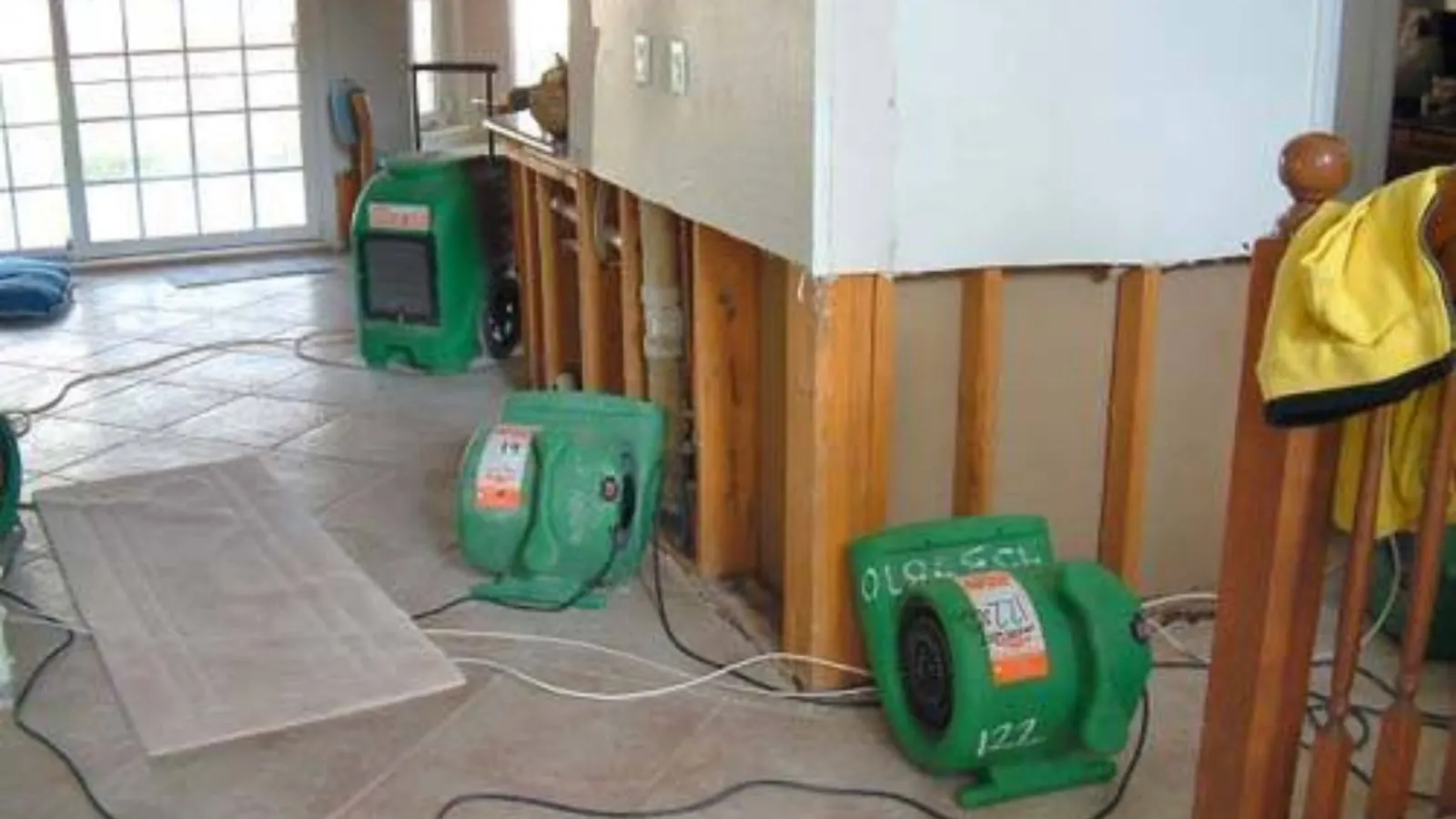
Open and dry the cavity
A flood cut is a straight horizontal cut made above the wet line, often at 2 feet or 4 feet. Wet insulation is removed and the studs are dried with air movers and dehumidifiers.
Rebuild
New board is hung, taped, mudded, primed and painted. Texture is matched where the wall had it, which is a skilled step.
What to do before the wall is opened
Find and stop the source
Close the nearest shut-off valve or the main. A wall that keeps getting wet cannot dry.
Protect the floor
Lay towels along the base of the wet wall and pull furniture away so the baseboard can breathe.
Check for power
If outlets in the wall are wet or the breaker trips, leave them off and call an electrician for any electrical doubt.
Mark the stain
Trace the edge of the stain with a pencil and note the time. If the line moves, water is still arriving behind the paint.
Damage level and the usual action
| Level | What you see | Typical response |
|---|---|---|
| Light | Damp paint, no softness, wet less than a day | Dry in place, repaint |
| Moderate | Soft lower wall, stained seams, wet insulation | Flood cut, replace insulation, dry cavity |
| Heavy | Sagging board, standing water behind it, long exposure | Remove full sheets, inspect framing |
| Contaminated | Sewage or flood water reached the wall | Remove board and insulation, clean framing |
The level is set by readings and by what the water carried, not by how the wall looks from across the room.
Permits and repairs in Douglas County
Douglas County Building Permits and Inspections says a building permit is required for exterior and interior renovations and for structures of 200 square feet or more. It also says contractors pulling permits show a state contractor's license, a business license and a driver's license.
A few sheets of replacement drywall may fall outside that, but a larger rebuild after a flood may not. Before work begins, ask the county permit office whether your repair needs a permit, and ask whoever does the work who is responsible for pulling it.
Patch, replace a section or redo the whole wall
Small wet patches that dry fast can be primed and painted without replacing anything. A standard flood cut is the middle path, taking out the lower portion and leaving the top intact. Taking out the entire wall makes sense when the water was dirty or when the same wall has been wet before.
Water often reaches walls from above, and our guide on ceiling water damage repair covers that route. Where lingering moisture raises mold questions, mold remediation explains a separate process that follows its own standard.
What changes the price of a wall repair
Height of the cut
A 2 foot cut costs far less than a 4 foot cut, and full sheets cost more again.
Insulation and framing
Wet insulation must go, and framing that stayed wet needs extra drying.
Finish work
Textured walls, wallpaper and dark colors take more labor to match.
Number of rooms
Water follows a wall from one room to the next, so the count of connected rooms matters.
Check with your insurer, since sudden and accidental wall damage is often covered while ongoing seepage often is not. Scope and price are explained before work starts, and for a real number on your walls, call (943) 469-0138.
Common Questions
Can wet drywall be dried instead of replaced?
Sometimes. Thin, clean-water damage caught within a day can dry with good airflow. Once the board is soft, stained or crumbling, replacement is more reliable than hoping.
Why cut the wall higher than the stain?
Water travels up the board above what you can see. A cut above the wet line leaves the repair with a solid edge and keeps wet material from staying in the wall.
How do I know the cavity is dry before it is closed?
A moisture meter reading on the studs and the back of the board is the check. Ask the crew to show you the readings and the dry reference they compare against.
Will the paint match?
Matching is possible but depends on the age and sheen of the old paint. A whole wall is usually repainted from corner to corner so there is no patch line.
What standard do the crews follow?
Crews work to the ANSI/IICRC S500 water damage standard, and you can ask any contractor if theirs do. Find out how we cover nearby areas on our Douglasville page.
Can I call after hours for a leaking wall?
Yes. The 24/7 line is (943) 469-0138, and same-day response is offered when available. Shut off the water first if the leak is coming from a pipe.
Is it safe to live in the house while the wall is open?
Usually, if the work area is sealed off with plastic and the dust is controlled. Keep children and pets out of the room, and ask the crew how long the equipment will run each day so you can plan around the noise.