
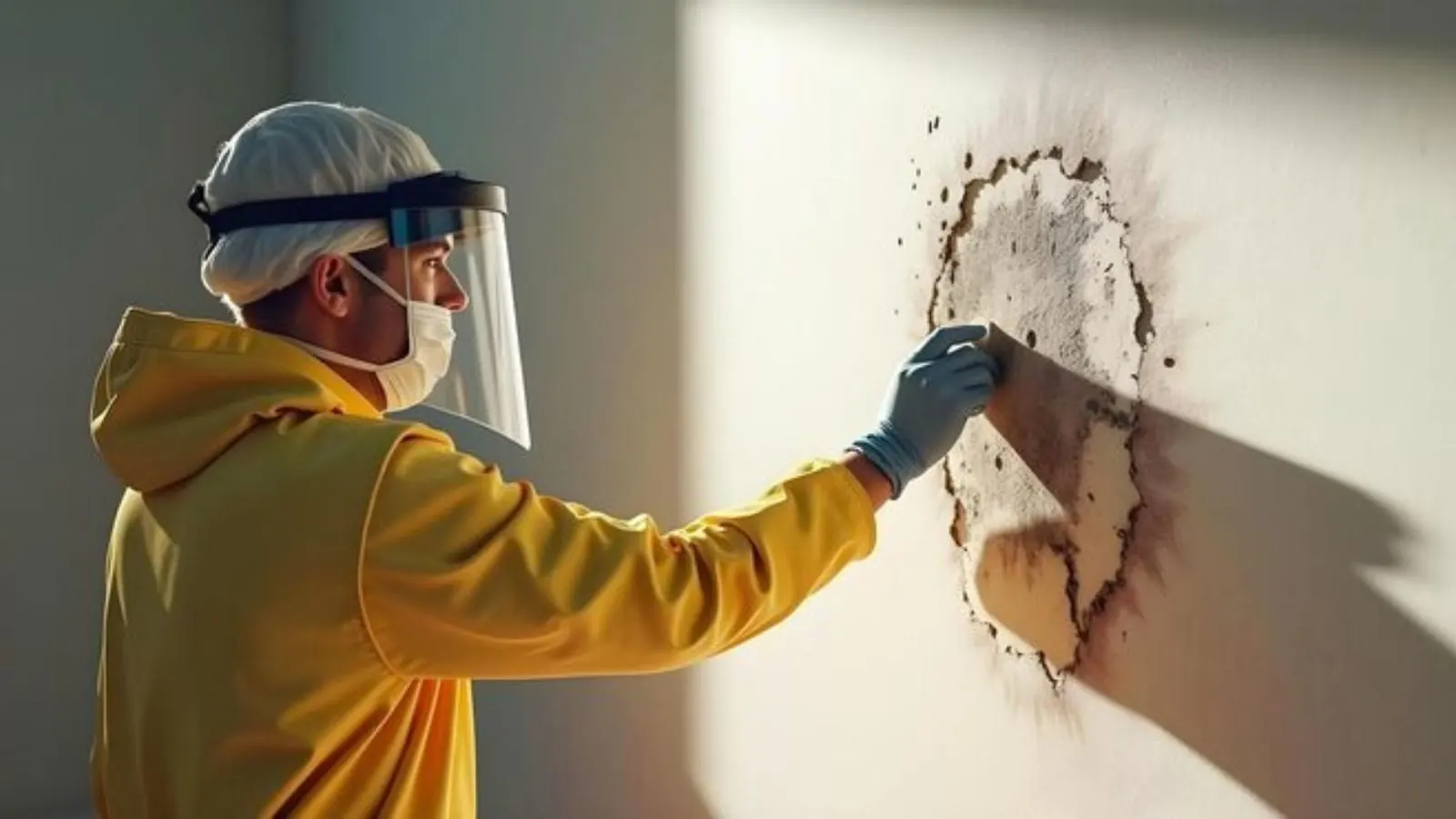
Mold coverage follows the moisture, and the policy decides
Many homeowners policies treat mold as a result of something else, not as a peril of its own. If a covered event such as a sudden pipe burst caused the moisture, mold that grows from it may be handled under that claim, sometimes with a sub-limit. If the moisture came from neglected maintenance or a long-running leak, mold is more often excluded.
The Georgia Office of Commissioner of Insurance publishes a homeowners guide that does not address mold at all and gives no claim filing deadlines. That silence is useful to know. It means you should not expect a state rule to answer the question, and your own policy and your insurer are where the answer lives.
How the source of moisture shapes the mold question
| Where the moisture came from | How mold is often treated | What to ask your insurer |
|---|---|---|
| Sudden pipe burst or appliance failure | May be handled with the water claim | Is there a mold limit, and does it apply here? |
| Roof damage from a covered storm event | May follow the covered roof claim | Does the policy treat mold as part of that loss? |
| Slow leak over months | Often excluded as gradual damage | How does the policy define seepage and wear? |
| Humidity, condensation, poor ventilation | Often excluded as maintenance | Is there any coverage for mold without a covered cause? |
| Flooding from creek or surface water | Flood is usually excluded from homeowners policies | Do I have a separate flood policy, and what does it say? |
| Sewer or drain backup | Depends on a backup endorsement | Was backup coverage added to my policy? |
General patterns only. Check your policy or ask your insurer for the language that applies to you.
The words to look for in your policy
Search the policy for mold, fungi, wet rot, dry rot and microbial growth. These terms often appear in an exclusion, a limited coverage endorsement, or both. Some policies exclude mold but grant a small amount of coverage when it results from a covered water loss.
Also look for the definitions of sudden, accidental, continuous and repeated. A policy can use the same word differently in different sections, and the definitions page often decides the case. Read the endorsements too, since a one-page add-on can change a coverage line.
If the policy language is hard to follow, call your insurer and ask for a plain explanation. Take notes with the date and the representative's name, and request any denial reasons in writing, which Georgia's insurance office advises.
Found mold after a leak?
Call (943) 469-0138 to talk through containment and drying. Dispatch is 24/7.
Mold, moisture and regulation in Lithia Springs
The Georgia Department of Public Health states that indoor air quality is not a regulated program in Georgia, that its branch offers no specific services related to indoor mold growth, and that there are no enforceable state or federal standards for mold inspection, testing or remediation. That means no state office will sort out a mold dispute for you.
NOAA 1991 to 2020 climate normals from the Atlanta Hartsfield station show about 50 inches of precipitation a year, with every month in the roughly 3 to 5 inch range. Persistent moisture is a normal feature of Georgia weather, and it is why drying quickly after any leak matters.
The tie-back is simple. Because no state authority regulates mold work, ask any company about its standard of work and put your questions to your insurer before you hire. Ask whether your crew follows the published ANSI/IICRC S520 mold standard, and ask your insurer what documentation it wants.
What mold needs, and why drying is the first coverage question
Mold needs moisture. Without a wet material to feed it, growth stops, though existing spores remain. The fastest way to reduce the chance of growth after a water loss is to dry the structure properly and promptly. Professional structural drying uses air movers and dehumidifiers to bring materials back to a dry standard, with moisture readings to verify.
Insurers often look at how quickly the home was dried. If you left wet carpet or soaked drywall in place for weeks, the argument that mold was caused by a covered event gets harder. Record the date the water was found and the date drying began.
Mold itself is a separate job from drying. Remediation contains the affected area, removes contaminated materials and cleans surfaces, as described on our mold remediation page. Post-remediation testing follows S520 practices where it applies.
Four steps if you find mold after a leak
The order matters, because several of these steps affect how a claim is read.
Stop the moisture
Find and stop the source. Without that, mold returns wherever the damp remains.
Document before cleanup
Photograph and video visible growth, the wet materials, and the source. Save any failed parts.
Report the loss
File as soon as possible, as the Georgia insurance office advises. A policy may require notice within a certain time frame.
Hold permanent repairs
The state warns an insurer may deny a claim if permanent repairs are made before inspection. Contain and dry, then rebuild after the inspection.
How to build a file that supports your position
Mold claims are often decided on timing. Gather the date water first appeared, the date you noticed growth, the date drying started and the date you contacted your insurer. A simple timeline written down while events are fresh carries real weight.
Add moisture readings if a drying crew took them, along with photos of the source and any failed parts. If a company contained the area or removed materials, keep its scope and invoices. Your insurer may ask for them, and you will want them if a decision needs to be reviewed.
Health questions, testing and who decides what
Questions about how mold may affect someone's health belong with a physician, not with an insurer or a restoration company. We do not diagnose or make health claims, and any article that does should be treated with caution.
Testing questions come next. Some insurers ask for proof of the problem and the fix, and some buyers or sellers ask for clearance testing. Ask your insurer which documents it will accept before you pay for any testing, and ask whether your state licenses mold work, since Georgia's public health office describes no enforceable state standard.
Residents of Douglasville and Mableton get the same advice. If mold has spread or water is still present, call (943) 469-0138. Crews dispatch around the clock, same-day response is offered when available, and scope and price are explained before work starts.
Common Questions
Does homeowners insurance cover mold?
Sometimes, and it depends on the cause and the policy wording. Mold that results from a covered water loss may be handled with that claim, while mold from neglected moisture is often excluded. Check your policy or ask your insurer.
Is mold covered after a flood?
Usually not under a homeowners policy, since the Georgia Office of Commissioner of Insurance states homeowners policies do not cover flood. A separate flood policy has its own terms, so read it.
Does Georgia have a state mold law that forces insurers to pay?
The Georgia Department of Public Health says there are no enforceable state or federal standards for mold inspection, testing or remediation, and the state homeowners guide does not address mold. Your policy language controls the answer.
How quickly should I act if I see mold after water damage in Lithia Springs?
Stop the moisture, document the growth, and report the loss as soon as possible. Weather matters here, since NOAA normals show roughly 50 inches of annual precipitation, and damp materials stay damp without active drying.
Should I clean the mold myself before the adjuster comes?
Document first and avoid permanent repairs. The state advises temporary repairs to prevent further damage and warns that permanent repairs before inspection can lead to denial. Ask your insurer what it expects.
Can a restoration company tell me whether my policy covers mold?
No. Only your insurer can determine coverage. A crew can scope the drying and containment work, record moisture readings and give you documentation to share.