
The short answer: it ends when the readings say so
Drying is finished when the wet materials return to the moisture level of a dry reference, not when a set number of days has passed. Crews working to the ANSI/IICRC S500 water damage standard set that dry goal at the start of the job and measure against it every visit.
That is why two houses hit by the same pipe can finish on different days. A small kitchen with vinyl flooring and painted drywall gives up its water quickly. A hallway with thick hardwood, a padded subfloor and insulated walls holds on far longer.
Anyone who quotes you a fixed number of days before looking at the structure is guessing. What you can reasonably expect is a plan, daily readings, and equipment that is removed only after the goals are met.
How water actually leaves a building
Water leaves a material as vapor. It evaporates from the surface, and then moisture deeper inside the material migrates toward that surface to replace it. The surface dries first, which is why a floor can feel fine to the hand while the layer beneath is still wet.
Two things control the pace. One is how much moisture the air can still absorb, which depends on temperature and humidity. The other is how fast air moves across the wet surface and carries vapor away.
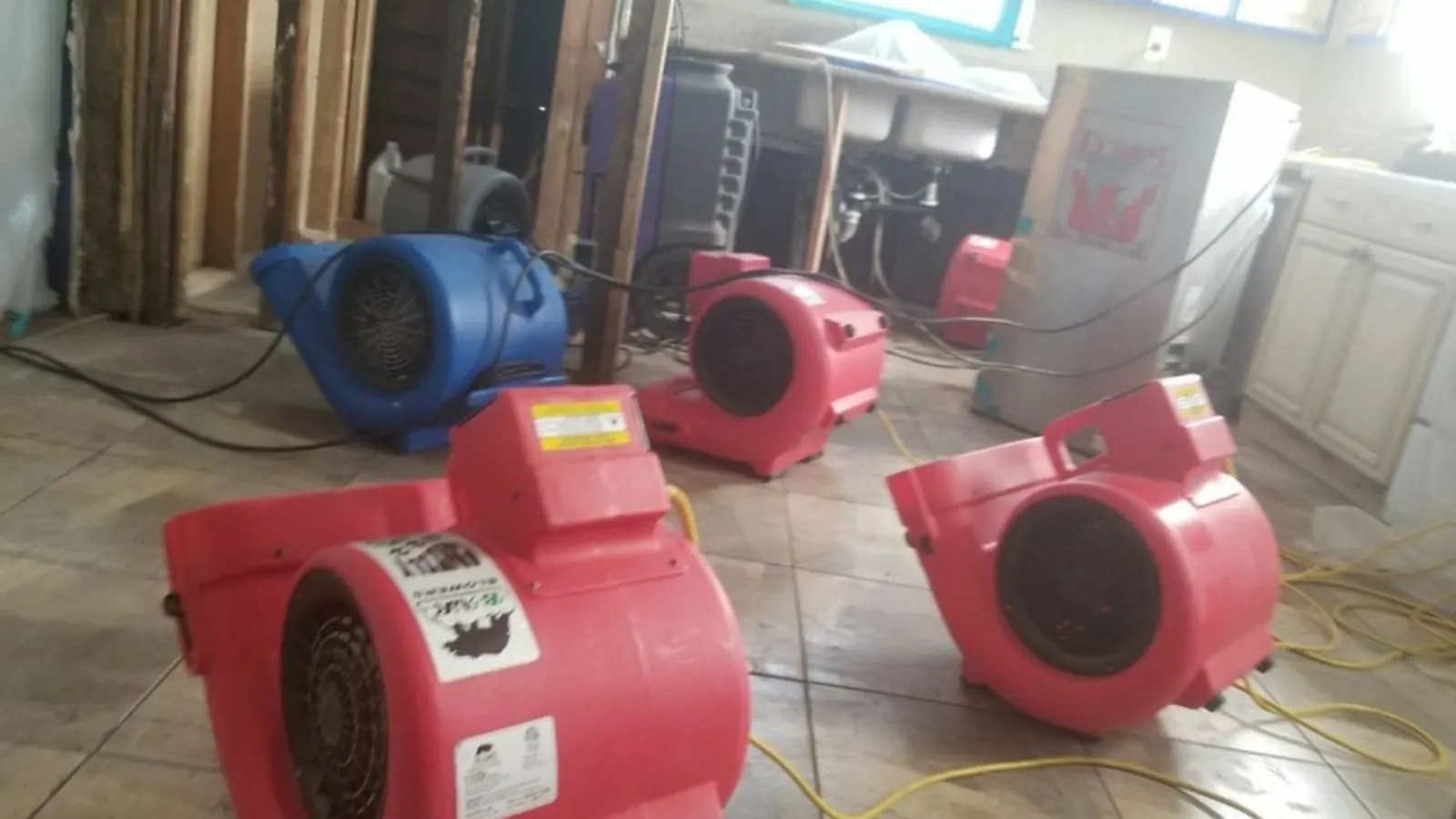
Restoration crews push both levers at once. Air movers put a thin layer of fast air across the surface, and dehumidifiers pull the vapor out of the room so the air can keep absorbing more. Opening a window on a muggy day does the opposite of what you want.
Heat helps too, because warm air holds more vapor and speeds evaporation. A room held around the normal indoor range dries more steadily than a cold one, and a closed room with the dehumidifier running dries faster than one open to the outdoors.
Wet right now? Do not wait on the clock
Call (943) 469-0138 for 24/7 emergency dispatch. The sooner the standing water is out, the less there is to dry.
Five things that set the clock
Every drying job comes down to the same short list. Look at your own situation against each one and you will see why a neighbor's story may not match yours.
Material density and thickness
Open, porous materials such as carpet and drywall release water readily. Dense or thick ones, such as solid hardwood, plywood subfloor and framing lumber, release it slowly because the moisture has a long path to travel.
How much water got in
A quick spill that was wiped up within hours is a different job from a supply line that ran overnight. More water means more mass to evaporate and more time for it to wick into the wall cavities.
Air temperature and humidity
Drying needs a gap between the vapor in the material and the vapor in the air. When the air is already near saturation, that gap closes and evaporation slows to a crawl.
Airflow and dehumidification capacity
The number and type of air movers and dehumidifiers matched to the room volume decides how fast vapor is removed. Too little equipment stalls the job, and too much in a tiny space wastes energy for no gain.
Hidden wet areas
Water travels down inside walls, under cabinets and beneath flooring. If a wet pocket is missed, the structure looks dry while the leftover moisture slows every reading afterward.
How different materials behave once they are wet
The table below shows the general pattern, not a promise for any job. Your own readings will differ with the amount of water and how long it sat.
| Material | How it holds water | What it means for drying |
|---|---|---|
| Painted drywall | Wicks water upward from the bottom edge | Often dries in place if caught early, wet insulation behind it slows the process |
| Carpet and pad | Fibers dry quickly but the pad acts like a sponge | Pad is often discarded, carpet may dry on site when the water was clean |
| Hardwood flooring | Absorbs slowly and releases slowly, boards can cup | Drying is gradual and monitored, sometimes with special mats pulling water through the boards |
| Plywood and framing | Dense, holds moisture deep in the grain | Usually the last to reach goal, readings guide when equipment can leave |
| Tile and concrete slab | Surface is hard but the slab stores moisture | Slab can keep releasing vapor for a long time, which affects flooring placed on top |
| Blown or batt insulation | Traps water against framing | May need removal or opening of the cavity so air can reach the wood |
What Lithia Springs weather means for drying
NOAA climate normals for the Atlanta Hartsfield station, the nearest long-record station in the research, show about 50 inches of rain in an average year, spread fairly evenly across all twelve months. That is a humid pattern, and the Lithia Springs area sits roughly 20 miles west of that station, so treat it as a regional guide rather than a local reading.
The tie-back is simple. In a wet, humid climate the outdoor air often cannot dry your house for you, so leaving windows open after a leak can add moisture instead of removing it. Keep the building closed and let a dehumidifier do the work.
Sweetwater Creek runs through the area, and the Douglas County small area plan notes that the creek corridor is a floodplain. If water came in from outside rather than from a pipe, ask the Douglas County building department about permits before rebuilding, and check your address on the FEMA flood map.
Drying goals under the S500 standard
The S500 standard describes drying in terms of measured goals. A crew takes readings in unaffected areas of the same type of material and uses those as the dry standard for the house. The wet materials are monitored until they match.
Moisture meters read the material directly. Thermal imaging cameras show cool patches where evaporation is happening or where water is hiding behind a finish, and a hygrometer tracks the air. The numbers go on a log so everyone can see the trend.
Water damage is also sorted into classes by how much evaporation load a room has. Class 1 is the lightest load, with low-porosity materials and little wet surface. Class 4 covers deeply held water in dense materials such as hardwood and concrete that needs specialty drying methods.
Ask any company you are considering whether its crews work to S500, and ask how they will document readings. That one question tells you a lot about whether the job will be driven by data or by a schedule.
Why a drying job stalls
Most delays have ordinary causes. A dehumidifier is undersized for the room. Doors are left open so equipment fights outdoor air. A wet cavity was never opened, so the framing cannot release its water.
Another common one is stopping too early. A surface reading looks good, equipment is switched off, and the deeper layer slowly pushes moisture back to the surface. The wall feels dry for a week and then the paint bubbles or an odor appears.
Mold needs moisture and organic material to grow. That is the reason crews watch for slow spots and keep working until the whole assembly reaches goal. If you suspect mold is already present, the mold remediation process follows its own S520 standard with containment and cleaning, separate from the drying itself.
What you can do while equipment runs
Keep doors and windows closed in the drying zone and leave the equipment alone. Moving an air mover to dry a favorite chair can leave the wall behind it wet.
Expect noise and a warm room. Dehumidifiers give off heat as they condense water, and that heat is part of why the drying works. Ask the crew for a plain-language explanation of where each machine is aimed.
If you have an electrical concern, tell the crew. Equipment draws real power, and a dedicated circuit may be needed for a large setup.
For a deeper look at how crews plan airflow and track readings on a job, read about structural drying and dehumidification on the service page.
Cost, insurance and the drying schedule
Equipment days are one of the factors behind a restoration bill, which is another reason a claim of a fixed time is not meaningful. More wet material, more equipment and more monitoring visits change the total.
On the insurance side, sudden and accidental damage is often covered, while gradual leaks and neglect often are not, and flood damage is usually excluded without separate flood coverage. Check your policy and ask your insurer what applies. Photograph the damage before drying begins, since the Georgia Office of Commissioner of Insurance advises keeping records for the insurer.
If you want to talk through your own situation, call (943) 469-0138. Scope and price are explained before work starts, and crews are dispatched around the clock.
Nearby neighborhoods, same physics
The principles above apply the same way across the county. Crews serving Douglasville work with the same humidity, the same materials and the same standards as they do in Lithia Springs.
The same holds for homes around Austell, where older houses may have denser framing and more layers of flooring to dry through. Structure matters more than the zip code.
Common Questions
Can I dry a wet room with box fans and a household dehumidifier?
For a very small, clean spill, fans and a dehumidifier can help. For anything that soaked a wall, a subfloor or a pad, a household unit usually cannot pull enough vapor, and hidden moisture stays behind. A moisture meter is the only way to know the structure is actually dry.
How will I know the drying is actually finished?
Readings in the wet materials match the dry reference set at the start, and the crew documents them. Feel and sight are not reliable, since a surface can seem dry while the layer under it is still holding water.
Why does the humidity in Lithia Springs make drying harder?
The Atlanta area gets about 50 inches of rain in an average year per NOAA normals, and summer air can be close to saturated. When the air holds a lot of vapor, evaporation slows.
That is why crews close the building and use dehumidifiers. Keep windows shut during drying instead of trying to air the house out.
Why would a company leave equipment running for several days?
The wettest, densest materials such as hardwood, plywood and framing release moisture slowly. Equipment stays until the logged readings reach goal, and each visit checks whether anything has changed. Ask to see the readings.
Does drying prevent mold?
Removing the moisture removes one of the things mold needs, and that is why speed and thoroughness matter. No process can promise that mold will never appear. If you see or smell growth, the S520 mold standard guides the next step, and health questions belong to a physician.
Is there a Lithia Springs reason a basement or low room stays wet longer?
Parts of the community sit near the Sweetwater Creek floodplain, which the county flags in its own plan, and low ground can keep soil moisture high after heavy rain. If water seeped in from outside, check the FEMA flood map for your address and ask the Douglas County building department about permits before rebuilding.