
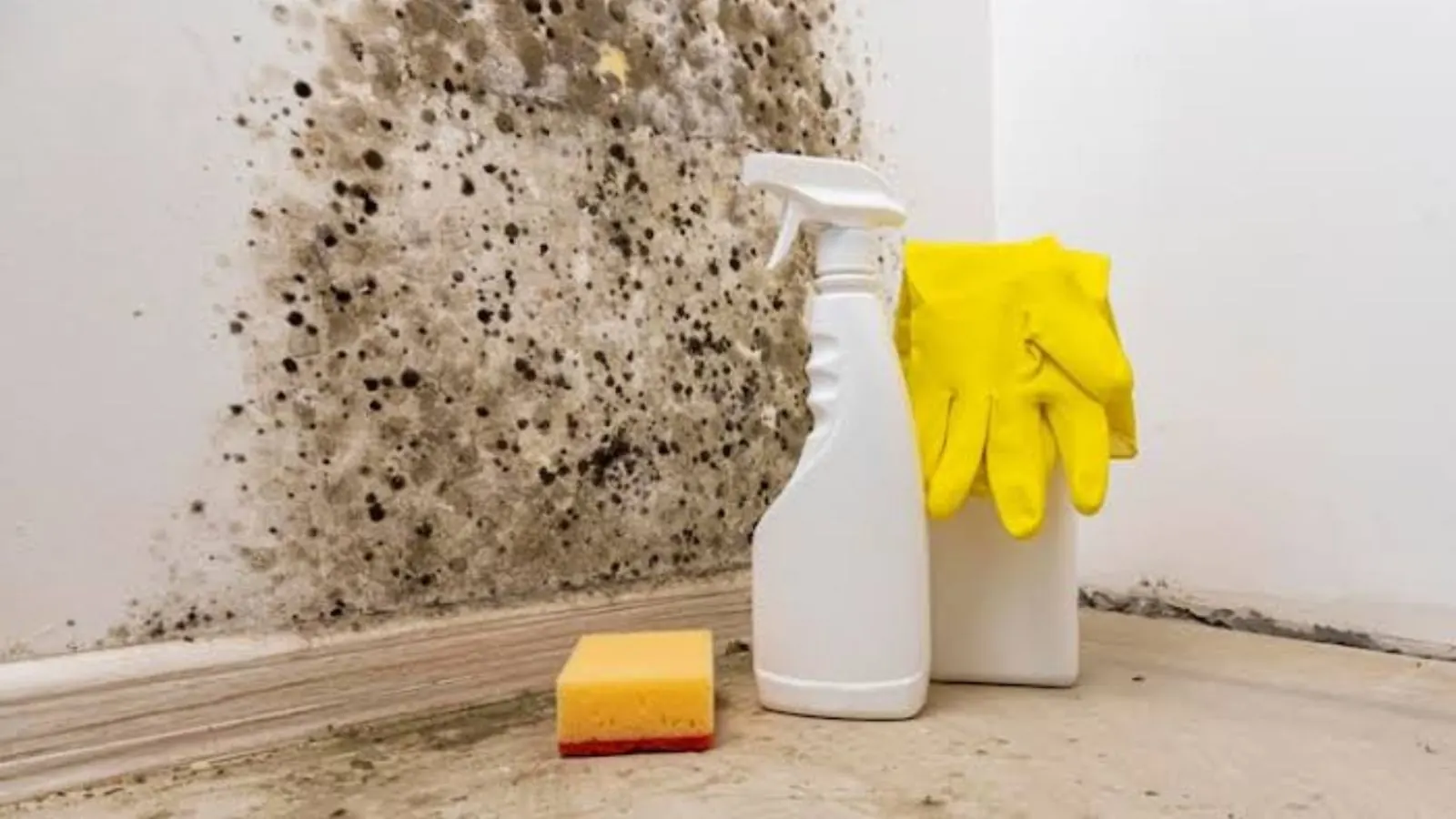
The short answer for a painted wall
For a small spot on a painted, firm wall, wet the surface lightly with a detergent solution, wipe with a damp cloth in one direction, bag the cloth, and dry the area fully. Then find out why the wall got damp. If you skip that last step, the spot is likely to reappear.
Drywall is paper-faced gypsum, and paper is food for mold. Once growth gets into the paper or the gypsum core, wiping the surface will not reach it. The material has to come out.
The rest of this guide shows how to tell which situation you have, what the safe steps look like, and where the line sits between a weekend task and a remediation job. Read all of it before you pick up a cloth.
Read the wall before you touch it
| What you see or feel | What it usually means | Next move |
|---|---|---|
| Small speckles on firm, painted drywall | Surface growth from condensation or splashing | Careful cleaning, then fix the moisture |
| Patch larger than a hand | Growth has had time and moisture to spread | Call the 24/7 line for a scope |
| Soft, bowed or crumbling drywall | Water has reached the gypsum core | Material removal, not cleaning |
| Wallpaper bubbles or paint peels in sheets | Moisture is moving through the wall | Moisture mapping before any cleaning |
| Musty smell with no visible growth | Growth or wet material inside the cavity | Moisture meter and thermal camera check |
| Growth after flooding or sewage | Contaminated water reached the wall | Stop and call, do not clean it yourself |
A moisture meter reading above the dry reference for the material, taken at the same height on an unaffected wall, tells you more than the color of the spot.
Why walls are tricky
A wall is a sandwich. Paint sits on paper, paper on gypsum, gypsum on studs, and behind that there may be insulation, a supply line, a drain or the back of an exterior sheathing board. Water can enter at any layer and travel.
Drywall wicks. Water at the baseboard can rise several inches inside the board, which is why a stain at knee height often means the wet zone goes higher than the stain. A moisture meter pressed across the wall in a grid shows the true edge.
That is also why a cleaned patch can return. If the wall is still holding moisture from a leak behind it, from a window that sweats, or from cold surface condensation along an exterior wall, the conditions that fed the first patch are unchanged.
Not sure how far the wall goes?
Call (943) 469-0138 and describe the wall. The 24/7 line can explain what a moisture check involves before work starts.
What the local housing record means for your walls
The Douglas County Lithia Springs Small Area Plan, a county planning document, says most residential development in Lithia Springs dates from about 1940 to 1980, with limited infill in the 1990s and 2000s. Houses from that era often have older plumbing, older window units and exterior walls built before modern air sealing practices. That describes the housing stock in general and not your wall in particular.
Take that as a prompt to check, not to worry. Look at the supply lines under sinks, the area around old windows, and any wall that backs onto a bathroom. Those are the places an older house tends to leak slowly.
If cutting out wall material turns into a renovation, the Douglas County building permits and inspections office, which issues building, plumbing and electrical permits, can tell you whether the work needs a permit. Ask before you cut.
A careful method for a small patch
Use this only when the patch is small, the wall is firm and the source of moisture is already fixed. Otherwise skip to the section on calling.
Protect yourself and the room
Wear nitrile gloves, goggles and an N95 style mask. Close doors, cover floor vents with plastic, and turn off the fan or HVAC system so spores stay put.
Dampen, then wipe
Mist the patch with a mild detergent solution so spores do not lift. Wipe with a damp cloth in one direction, folding the cloth to a clean face often.
Bag and dispose
Seal wipes and cloths in a plastic bag before they leave the room. Do not shake them out, and do not reuse them elsewhere.
Dry fully and recheck
Run a dehumidifier and a fan pointed away from the patch until a moisture meter shows the wall at the same reading as a dry wall. Look again after a week.
Things that make wall mold worse
Dry scrubbing or sanding sends spores airborne. Spraying a wall until it is soaking adds the very moisture that feeds growth. Mixing cleaning chemicals can create harmful fumes, so use one product at a time and follow its label.
Painting over a patch hides it without removing it, and a fresh coat on a damp wall often blisters. Mold-resistant paint is a coating, not a drying system, and it does not make a wet wall dry.
A surface product may lighten a stain on a hard surface. It does not reach growth inside porous drywall paper, and no cleaning step can promise that mold will stay away. Only controlling moisture shortens the odds.
When to stop DIY and call
Stop and call (943) 469-0138 if the patch is bigger than a hand, if the drywall is soft or bowed, if growth showed up after flooding, a sewage backup or a long roof leak, or if the smell is strong but the source is hidden. Call as well if the wall holds outlets that got wet, and shut off power at the panel only if you can reach it dry.
Questions about how mold affects a person belong with a physician. A restoration crew handles the building, not the diagnosis.
What a crew does differently on a wall
A crew starts with moisture mapping using a meter and a thermal imaging camera, then sets up containment with plastic sheeting. A HEPA air scrubber runs to hold the room under negative pressure so air flows toward the filter instead of into the rest of the house.
Affected drywall is cut out in sections beyond the visible edge, bagged in the room and removed. Studs and framing are cleaned, then dried with air movers and LGR dehumidifiers until readings match the dry standard. Work follows ANSI/IICRC S520. Details are on the mold remediation page.
If the real problem is that the wall stays wet after a leak, structural drying comes first or alongside. Teams that cover Lithia Springs also serve Mableton and Douglasville, so a call from a nearby address gets the same dispatch.
Rebuild and finish only after the wall is dry
Replacement drywall goes in only after framing reads dry and any cleaning is complete. Prime with a stain-blocking primer before paint. If the removal exposed old wiring or plumbing, a licensed trade should look before the wall is closed.
Ask whoever does the work whether the scope, the drying readings and the cleaning method follow S520, and ask for the plan in writing before work starts. A clear answer is a good sign.
Common Questions
Can bleach remove mold from drywall?
Bleach can lighten color on a hard surface, but drywall is porous and the growth sits in the paper and gypsum. Moisture left in the wall keeps feeding it. A detergent wipe for a tiny surface patch, or removal of the material for anything bigger, is the safer approach.
Do I need to cut out the drywall?
If the board is soft, bowed, crumbling or the growth is larger than a hand, yes, removal is the standard approach. Crews cut beyond the visible edge and check the studs behind with a moisture meter.
How do I know the wall is dry enough to close up?
Compare meter readings on the repaired wall with a dry reference wall in the same house. Readings should match and stay stable for a day or more. A crew documents the numbers so you can see them.
Should I test the wall for mold first?
Testing is optional and does not replace finding the moisture. Georgia has no enforceable state standards for mold testing, so ask any tester how results will be compared with an outdoor sample before you pay.
Do I need a permit to replace wall drywall in Lithia Springs?
Douglas County issues building permits for structures and for exterior and interior renovations. A small patch repair is often handled without one, but a larger rebuild may need it. Call the Douglas County building permits office to confirm for your address.
What if the mold came back after I cleaned it?
Return usually means the wall is still getting moisture from a hidden leak or condensation. Check plumbing on the other side and the window or exterior wall nearby, then call for a moisture check before cleaning again.