
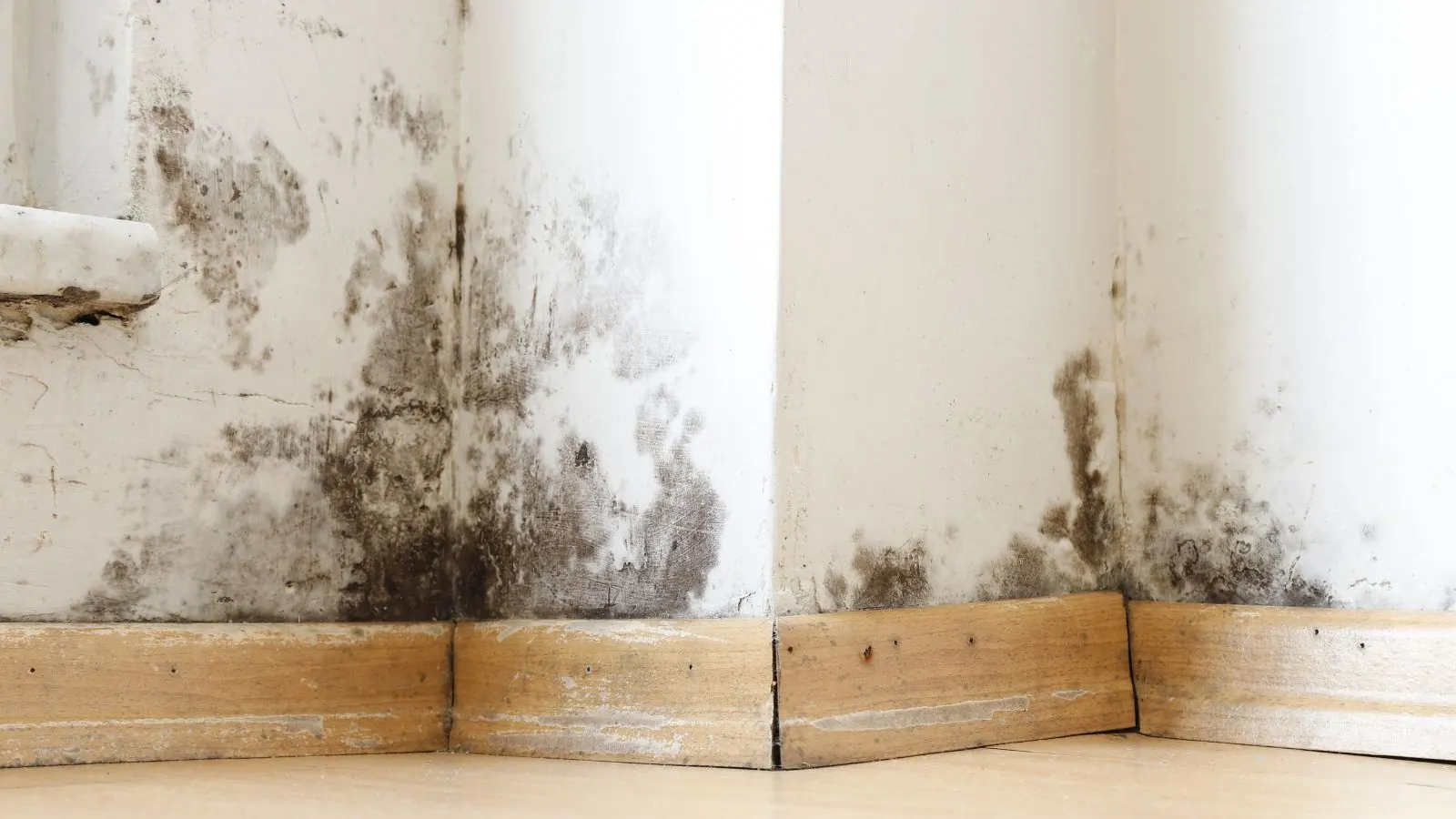
Start with the board, not the spot
Mold on wood can mean very different things. A gray film on a sealed baseboard is surface growth that wipes away. A fuzzy patch on a subfloor joist over a damp crawl space is a sign that the wood has been wet for weeks.
The question that decides everything is how wet the wood still is. Mold needs moisture, and wood that has dried down stops supporting new growth. A pin or pinless moisture meter gives a number in seconds, and in a conditioned house sound wood typically reads in the low to mid teens or below.
Read the board first. Then decide whether cleaning, sanding or replacing is the honest answer.
Wood type and the usual approach
| Wood | Typical problem | Usual approach |
|---|---|---|
| Sealed trim and baseboard | Surface film from humidity or splashing | Damp wipe, dry fully, watch for return |
| Unfinished framing and joists | Growth on rough surfaces after a leak | Professional cleaning methods after drying |
| Subfloor panels (OSB, plywood) | Swelling, delamination and growth on edges | Often replaced if soft or layered apart |
| Hardwood flooring | Cupping, dark staining between boards | Moisture check first, then dry or replace |
| Cabinet boxes and shelves | Growth inside after a sink leak | Clean hard surfaces, replace swollen particleboard |
| Exterior deck and fence lumber | Green or black film outdoors | Outdoor wash, sealing, and drainage checks |
Engineered panels such as OSB and particleboard swell and break down once saturated, so they are replaced more often than solid lumber.
Mold is not the same as rot
Mold feeds on the surface of wood and on sugars and dust that collect there. It usually discolors without weakening the board much. Decay fungi, often called rot, break down the wood fibers themselves and make the board soft, crumbly or stringy.
A simple test is to press a screwdriver tip into the wood. If it sinks in easily or the wood pulls away in chunks, you are past surface mold and the board may be structurally compromised. Framing in that condition should be looked at before anyone cleans it.
This difference also explains why one board is wiped and another is cut out. Cleaning removes surface growth. It cannot restore strength to a board that rot has already weakened.
Wood still damp after the leak is fixed?
Call (943) 469-0138 and a dispatcher can explain what a moisture check and drying plan involve before work starts.
Why Lithia Springs wood can stay damp longer than you expect
NOAA climate normals for 1991 to 2020 from the Atlanta Hartsfield station, the nearest long record we found and roughly 20 to 25 miles east, show about 50 inches of precipitation in an average year. That is a federal agency figure and not a Lithia Springs measurement, but it describes the same region.
Steady rain means soil stays damp, gutters work hard and wood near the ground picks up moisture. Check that downspouts discharge away from the foundation, that soil slopes away from the house, and that any crawl space vent or vapor barrier is intact. Wood in contact with damp soil or a leaking gutter is where surface mold turns into decay.
We found no source stating how common crawl spaces are in Lithia Springs, so check your own house rather than assume. A professional moisture check gives actual readings for your framing.
Cleaning surface mold on finished wood
This method fits sealed trim, furniture frames and similar finished surfaces with light growth. It does not suit framing.
Control the moisture first
Fix the leak or humidity source. Run a dehumidifier so the wood can dry below the readings that support growth.
Vacuum with HEPA, then damp wipe
Use a HEPA vacuum on dry loose growth, not a household vacuum that blows spores out. Follow with a damp cloth and mild detergent, wiping in one direction.
Dry the board completely
Use air movement and a dehumidifier. Check with a meter. Wood that still reads high will grow again.
Seal or finish after it is dry
Light sanding of a stained surface is possible once dry, with a respirator and containment. Then seal or finish to make future wiping easier.
Framing, joists and subfloors need a different method
Rough, unfinished lumber has a textured surface that holds growth in small fibers, and a wipe will not reach it. Professionals use controlled methods after the wood is dry, such as HEPA vacuuming and abrasive cleaning inside containment, so removed material stays out of the living space.
Subfloor panels and engineered materials that are swollen, soft or layered apart are normally cut out and replaced. The same goes for any piece of framing that fails the screwdriver test. These are building repair decisions, so a licensed trade should look at structural lumber before it is closed up again.
Crews work to ANSI/IICRC S520 for mold, and ANSI/IICRC S500 for the water damage that came first. You can ask any company whether its crews follow both.
When to stop DIY and call
Stop and call (943) 469-0138 if growth covers framing or joists, if wood is soft, if the area is a crawl space, if the mold appeared after flooding or sewage, or if the material is more than you can bag and carry out. Do not sand large areas indoors. Sanding mold produces fine dust that spreads through the house.
Questions about how mold may affect a person belong with a physician. A restoration crew handles the structure and not the diagnosis.
What a crew does for wood after a wet event
The sequence is measure, contain, remove what cannot be saved, clean what can, then dry. Moisture mapping with a meter and a thermal imaging camera shows where the wet zone ends. Containment with sheeting and a HEPA air scrubber keeps disturbed material from traveling.
Wood that can be saved is cleaned and dried with air movers and LGR dehumidifiers until readings match the dry reference. The details sit on our mold remediation page. If the main issue is wood that stays damp after a leak, structural drying and dehumidification addresses the cause.
The same dispatch line covers neighboring areas such as Austell and Douglasville. Mention your area when you call.
Keeping wood dry after you clean it
No cleaning method can promise that mold will stay away, because spores are always in the air and new moisture restarts the cycle. The practical goal is to shorten every wet period.
Keep gutters clear, vent bathroom fans outside, run a dehumidifier in damp spaces, and fix drips quickly. Keep stored wood and cardboard off concrete floors and off soil. Check crawl space vapor barriers after heavy rain.
These steps lower the odds. They do not eliminate them, and an honest contractor will say so.
Common Questions
Can I sand mold off wood?
Light sanding on a small dry finished piece is possible with a respirator, but sanding creates fine dust. For framing or larger areas, containment and a HEPA vacuum should be part of the method. Sand only after the wood is dry.
Is vinegar or bleach better on wood?
Neither reaches growth deep in the grain. A mild detergent and damp wipe handles light surface growth on finished wood, and drying matters more than the product. Do not mix cleaners, and never combine bleach with ammonia.
How do I know if the wood is rotted?
Press a screwdriver tip into the board. If it sinks in easily or wood fibers crumble, the board is softened by decay and a licensed trade should assess it. Surface mold alone does not soften wood.
Should I replace moldy subfloor?
If the panel is swollen, soft or delaminating, replacement is the usual answer. Solid plywood that reads dry and is firm may be cleaned and kept. A moisture reading decides, not appearance.
Does Lithia Springs rainfall affect crawl space wood?
Atlanta Hartsfield averages about 50 inches of precipitation a year in NOAA 1991 to 2020 normals, and Lithia Springs sits in the same region. Wet soil and poor drainage can raise moisture around floor framing. Check drainage and ask a professional for a moisture reading.
Will the mold return after cleaning wood?
No one can promise it will stay away. If the wood is dried and the moisture source is fixed, the conditions that feed growth are removed. A new leak or humidity problem can restart it, so check again after rain.