
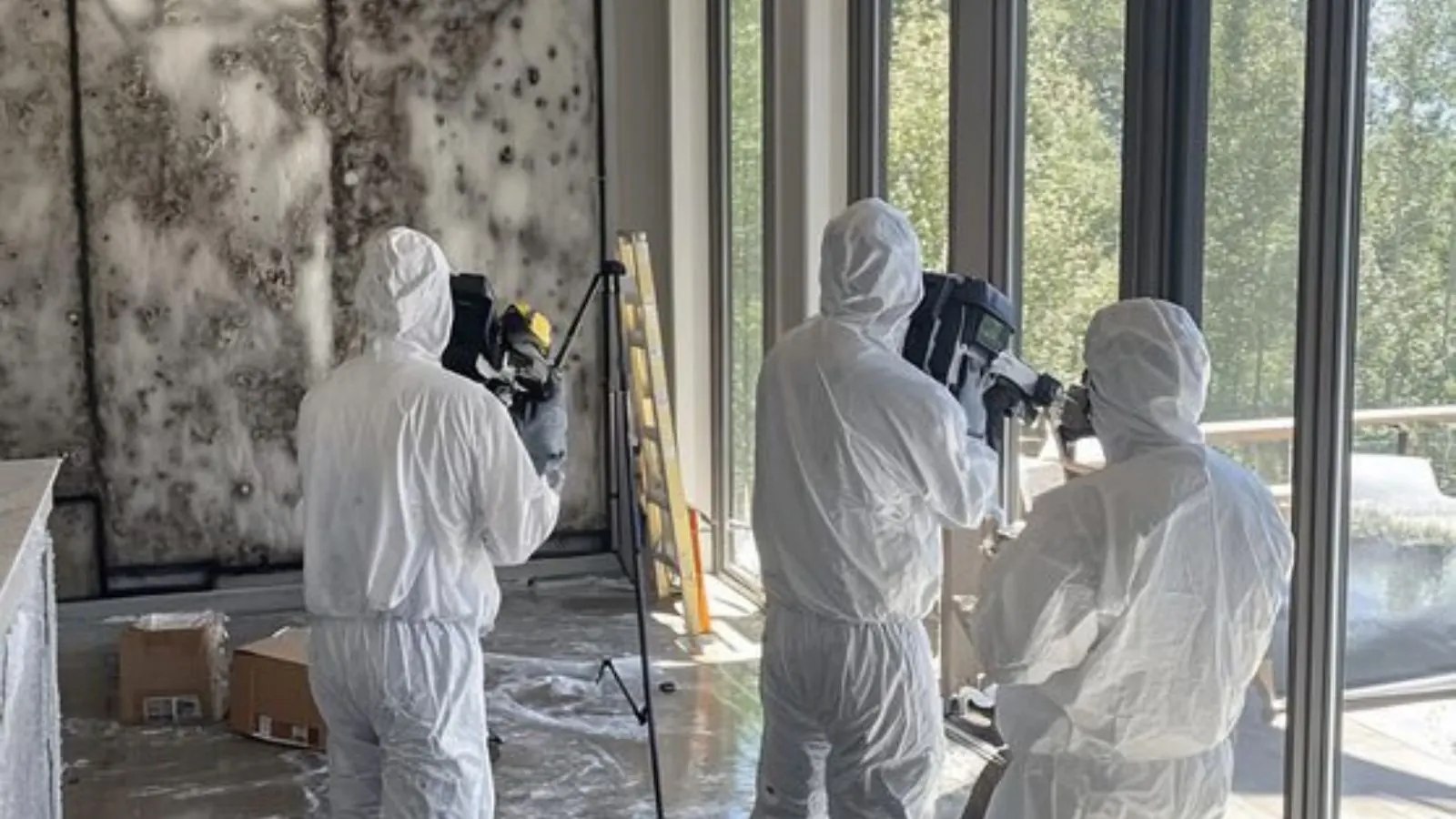
What clearance testing actually is
Clearance testing, often called post-remediation verification, is an assessment made after mold cleanup to see whether the work area meets its stated goals. It usually combines a visual inspection, a check that moisture is under control, and sometimes air or surface samples.
It answers a narrow question: did the cleaning achieve what the plan said it would? It does not promise that mold will never return, because mold needs moisture and any new water can restart the problem.
The ANSI/IICRC S520 standard for professional mold remediation describes the process of assessing, containing and cleaning, and it recognizes verification as part of finishing the work. Ask any company whether its crews work to S520.
Why a sale puts the spotlight on it
Buyers, lenders and agents often ask for something in writing when mold is part of a house's history. A clearance report gives them a dated record of what was cleaned, what was checked and what the result was.
For sellers, it replaces a vague statement such as the leak was fixed with an actual document. For buyers, it is a way to see whether a past problem was treated or just painted over.
Neither side should treat it as a promise. It is a snapshot taken on a certain day, under certain conditions, by a particular person.
Who does what in a mold job
The roles below are different, and mixing them up is the main cause of confusion at closing.
| Step | What happens | Who typically does it |
|---|---|---|
| Assessment | Find moisture sources and extent of growth, write a plan | Assessor or remediation company |
| Moisture control | Repair the source and dry the structure to goal | Plumber or roofer for the source, restoration crew for drying |
| Remediation | Contain the area, remove or clean affected materials, HEPA filtration | Remediation crew working to S520 |
| Verification | Inspect, measure moisture, sometimes sample, compare against the plan | Preferably someone independent from the cleanup crew |
| Sale paperwork | Disclosure forms, reports, receipts passed to the buyer | Seller, with help from an agent or attorney |
Independence matters. A person who checks their own work has a built-in conflict, which is why many buyers prefer a separate verifier.
Planning a sale with a water or mold history?
Call (943) 469-0138 to talk through drying records and next steps. The line is staffed 24/7.
What Georgia says, and what it does not say
The Georgia Department of Public Health indoor air page states that indoor air quality is not a regulated program, that the branch offers no specific services related to indoor mold growth, and that mold inspection, testing and remediation have no enforceable state or federal standards. That page does not describe a state mold license.
A state licensing list was not available to confirm whether Georgia licenses mold work. So the advice is simple: ask whether your state licenses mold work, ask the Georgia Secretary of State licensing office, and ask any company to show you what training and standards it follows. Do not assume a license exists or does not exist.
The tie-back for a Lithia Springs sale is that the report is only as good as the person who wrote it. Without a state rulebook, choose professionals who work to S520, put the sampling method in writing, and keep the paperwork with the sale file.
Douglas County requires contractors pulling permits to show a state contractor license, a business license and a driver's license. If rebuild work needs a permit, ask the Douglas County building department what applies to your project.
What goes into a typical clearance check
The inspector walks the area looking for visible growth, staining, odor and damp materials. Moisture meters check wall surfaces and framing, and a thermal imaging camera can show a cold spot that suggests hidden dampness.
If samples are taken, the lab results are compared against a reference such as outdoor air or an unaffected room. The purpose is to see whether the work area looks like a normal indoor space, not to hit a magic number.
Because there are no enforceable state or federal numeric limits for mold in homes, a report should say what was sampled, how, where, and what it was compared with. A report with a result and no method is hard to rely on.
Questions to ask before you pay for a report
Put these to anyone offering clearance testing. Their answers will tell you most of what you need.
Who is writing the report?
Ask if the person is independent from the company that did the cleaning. A separate verifier removes the conflict of grading your own work.
What standard is being followed?
Ask if the plan and verification follow S520, and ask to see the written scope before work starts.
Is the moisture problem fixed?
Clean walls with a leaking pipe behind them will fail again. The report should include moisture readings and the source repair.
What exactly is covered?
Ask which rooms, cavities and materials were checked, and what was left out. A report for one bathroom does not cover the attic.
Clearance does not replace drying
Mold work and water work go hand in hand. If a house had a leak, the structure needs to be dried to goal before any verification means much. Wet framing under a clean-looking wall will undo the result.
That is why a crew documents moisture readings through the drying process. Your clearance file is stronger when it includes the drying log. You can read how that works on the page about structural drying and dehumidification.
If growth is present, containment and removal are covered in mold remediation, which describes the work area, filtration and cleaning steps.
Health, disclosure and insurance questions
Health questions belong to a physician. A clearance report is a building document, not a medical opinion, and nobody in this process can tell you how mold will affect a particular person.
Disclosure is a legal question, not a restoration one. Ask your real estate agent or attorney what you must tell a buyer and what documents to attach. Keep receipts, reports and photographs together.
Insurance coverage for mold varies a great deal. Sudden and accidental water damage is often covered, while gradual leaks and neglect often are not, and mold may have its own limits. Check your policy and ask your insurer.
Where this applies across the county
The same questions come up for sales around Douglasville, where buyers and agents ask for documents when a house has a water history. The standards and the paper trail work the same way.
Homes in Austell fall under a different permit authority, the City of Austell, so permit questions go to the city instead of the county. The mold standards themselves do not change with the town line.
If you are preparing a house for sale and want to talk through a mold or water history, call (943) 469-0138. Scope and price are explained before work starts.
Common Questions
Is clearance testing required to sell a house in Georgia?
Georgia's public health office states that mold inspection, testing and remediation have no enforceable state or federal standards. Whether a buyer, lender or contract requires a report is a matter of that deal, so ask your agent or attorney.
Does passing clearance mean mold will not come back?
No. Mold needs moisture, so any new leak or humidity problem can bring growth back. A pass means the cleaned area met its goals on the day it was checked.
Should the same company clean and test?
Many buyers prefer an independent verifier, because a company checking its own work has a built-in conflict. Ask for the scope and the method in writing either way.
Does Georgia license mold remediators?
The Georgia DPH page does not mention a state mold license, and the Secretary of State's licensing lists are the place to verify. Ask whether your state licenses mold work and verify with the Georgia Secretary of State.
Which Lithia Springs office would I ask about permits for rebuild work after mold removal?
Douglas County Building Permits and Inspections is the county office that lists building permits, and Lithia Springs is an unincorporated community in Douglas County. Homes inside a city such as Austell may go through that city instead, so confirm which jurisdiction your address falls under.
Do I need clearance if the area was only cleaned and not torn out?
A check is still useful for the record, since cleaning without verification leaves nothing to show a buyer. Ask the assessor what scope fits the size of the problem.