
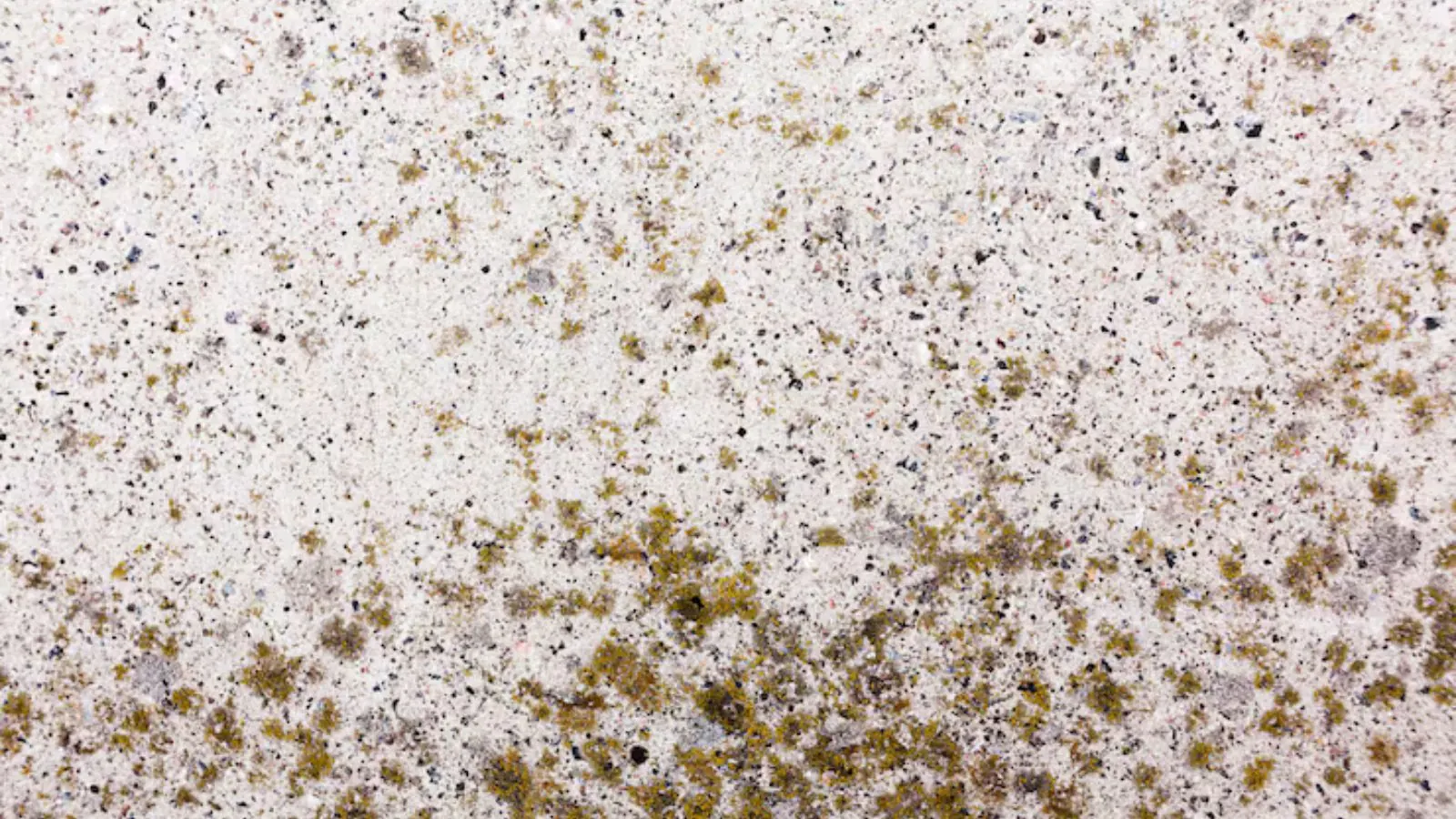
Short answer: one family, two everyday labels
Mildew and mold are both fungi. In everyday use, mildew describes a flat, powdery or downy growth that lies on a surface, often white, gray or pale yellow at first. Mold is the umbrella word, and most people picture the thicker, fuzzy, darker patches.
The line between the two is not sharp. Scientists use mildew for certain plant diseases, while builders and homeowners use it for light growth on shower walls and window sills. A lab can name the organism, but a person standing in a bathroom cannot.
What matters is behavior. A surface film that wipes away from a hard, sealed surface is a cleaning job. Growth that bleeds into drywall, wood or grout, or keeps coming back, points to hidden moisture.
Side by side
| Trait | Commonly called mildew | Commonly called mold |
|---|---|---|
| Texture | Flat, powdery or downy | Fuzzy, slimy or raised |
| Early color | White, gray or pale yellow | Black, green, brown, blue or orange |
| Typical spot | Shower walls, window sills, caulk, leaves | Drywall, ceiling tile, wood, carpet pad |
| Depth | Mostly on the surface | Can grow into porous material |
| Usual cleanup | Detergent wipe on hard surfaces | Often removal of porous material |
| What it signals | Humidity or condensation | Often a leak or longer wetting |
Color is not a reliable guide. Mildew can darken with age and mold can start pale.
A fast way to read what you are looking at
Start with the surface. Growth on tile, sealed caulk, glass or a painted window sill is almost always the lighter kind, and it usually responds to cleaning. Growth on drywall, ceiling tile, carpet or raw wood is a different matter because those materials soak up moisture.
Then check the dampness. Press a moisture meter against the area, or feel for cool, clammy material. A bathroom wall that fogs daily explains a surface film. A wall that is wet even when the bathroom is dry explains something else, such as a slow leak.
Finally, watch how it behaves. If you wipe it clean and it returns within a week or two, the moisture source is still there. That pattern matters more than the name.
Cleaned it twice and it keeps returning?
Call (943) 469-0138. The 24/7 line can explain what a moisture check involves, and scope and price are explained before work starts.
Where each tends to show up
These are the usual homes for light growth and for deeper growth. Each room has its own moisture habit.
Bathrooms
Shower walls, caulk lines and ceilings above showers collect steam. A fan that does not vent outside leaves the humidity in the house.
Windows
Single pane glass and metal frames sweat in cool weather. The sill and nearby paint stay damp for hours.
Kitchens and laundry
Under-sink cabinets and washer drains leak slowly. Growth often appears on the cabinet floor first.
Closets and exterior walls
Cold exterior walls and closed closets hold humid air. Growth shows on the back wall or on stored fabric.
What Lithia Springs weather means for damp surfaces
NOAA 1991 to 2020 climate normals for the Atlanta Hartsfield station, the nearest long record found and about 20 to 25 miles east, put monthly precipitation between roughly 3.3 inches in October and 4.75 inches in July. That is a federal agency record for the region and not a Lithia Springs gauge. The spread is small, so no month is a reliably dry one.
For a homeowner that means damp air is a year round feature, not a summer problem. Use the bathroom fan after every shower, run it for a while afterward, and wipe condensation off windows and tile. If a surface keeps fogging, a dehumidifier in that room can help.
Watch for cool spots, since moisture settles on them first. If cleaning does not hold, call for a moisture check, because the real source may be behind the wall.
How to clean light growth on a hard surface
This applies to tile, glass, sealed caulk and sealed painted surfaces. It does not suit drywall or raw wood.
Ventilate and protect
Open a window, run the fan and wear gloves and a mask. Do not blow a fan across the growth.
Mist and wipe
Mist the area with warm water and mild detergent. Wipe in one direction with a damp cloth and rinse the cloth often.
Dry the surface
Dry with a towel and let air move. Dry surfaces give growth less to feed on.
Fix the cause
Repair the leak, seal the gap or add ventilation. Cleaning without this step only resets the clock.
What cleaning products can and cannot do
Household cleaners can remove surface film from a hard surface, and that is where they are useful. They do not dry a wall, and they do not reach growth inside porous drywall paper or raw wood. Never mix cleaning chemicals, and always follow the label on each.
No product, paint or coating can promise that mold or mildew will stay away. Spores are always in the air, so the realistic goal is to lower the amount of time surfaces stay damp.
If a stain returns after you have cleaned and dried the area, treat it as a moisture clue and not a stubborn spot. Look at the room's ventilation, the plumbing behind the wall and the seal around windows.
When to stop DIY and call
Stop and call (943) 469-0138 if growth covers more than about a hand's width of porous material, if drywall feels soft, if growth returns after cleaning, if a musty smell has no visible source, or if the patch followed a leak, flood or sewage backup. Questions about how any growth may affect a person belong with a physician.
When it is more than mildew
A crew treats mold under the ANSI/IICRC S520 standard. That means containment with plastic sheeting, HEPA air scrubbers, removal of porous material that cannot be cleaned, cleaning of framing and drying with air movers and dehumidifiers. See the mold remediation page for the full process.
If the real trouble is a structure that stays wet after a leak, structural drying and dehumidification works on that. You can ask any company whether its crews follow S520, and ask whether your state licenses mold work.
Calls from Douglasville and Mableton go to the same dispatch line as Lithia Springs addresses. Mention your area when you call.
Habits that keep surfaces dry
Run bath fans during and after showers. Fix drips under sinks. Keep furniture a few inches off exterior walls so air can move. Clear gutters and extend downspouts so water does not collect against the foundation.
A small hygrometer costs little and shows the humidity in a room. Staying under roughly 50 to 60 percent relative humidity gives growth less support. These steps lower the odds and do not remove them.
Common Questions
Is mildew less serious than mold?
Light mildew on a hard surface is usually an easier cleanup. But the label alone does not tell you what is happening behind the surface. Judge by material, size and whether it returns. Health questions belong with a physician.
Can I tell mold from mildew by color?
Not reliably. Both can be white, gray, black or green depending on age and surface. Texture, material and moisture readings tell you more.
Is black mold always worse than other mold?
Color does not identify a species, and only a lab can name one. Treat any growth on porous material the same way: find the moisture, limit disturbance and call for larger patches.
Why does mildew keep returning to my shower?
Steam, soap film and poor ventilation keep the surface damp. Run the fan longer, wipe the walls, and replace failed caulk. If it shows up on the ceiling or outside wall, check for a leak.
Does the humidity in Lithia Springs make mildew more likely?
NOAA normals for the Atlanta Hartsfield station show precipitation every month, between about 3.3 and 4.75 inches. That shows no reliably dry month, so use fans and dehumidifiers all year.
Should I test to tell mold and mildew apart?
Georgia states that mold testing has no enforceable state or federal standards, and a lab result needs an outdoor comparison to mean anything. A moisture meter often tells you more than a test.