
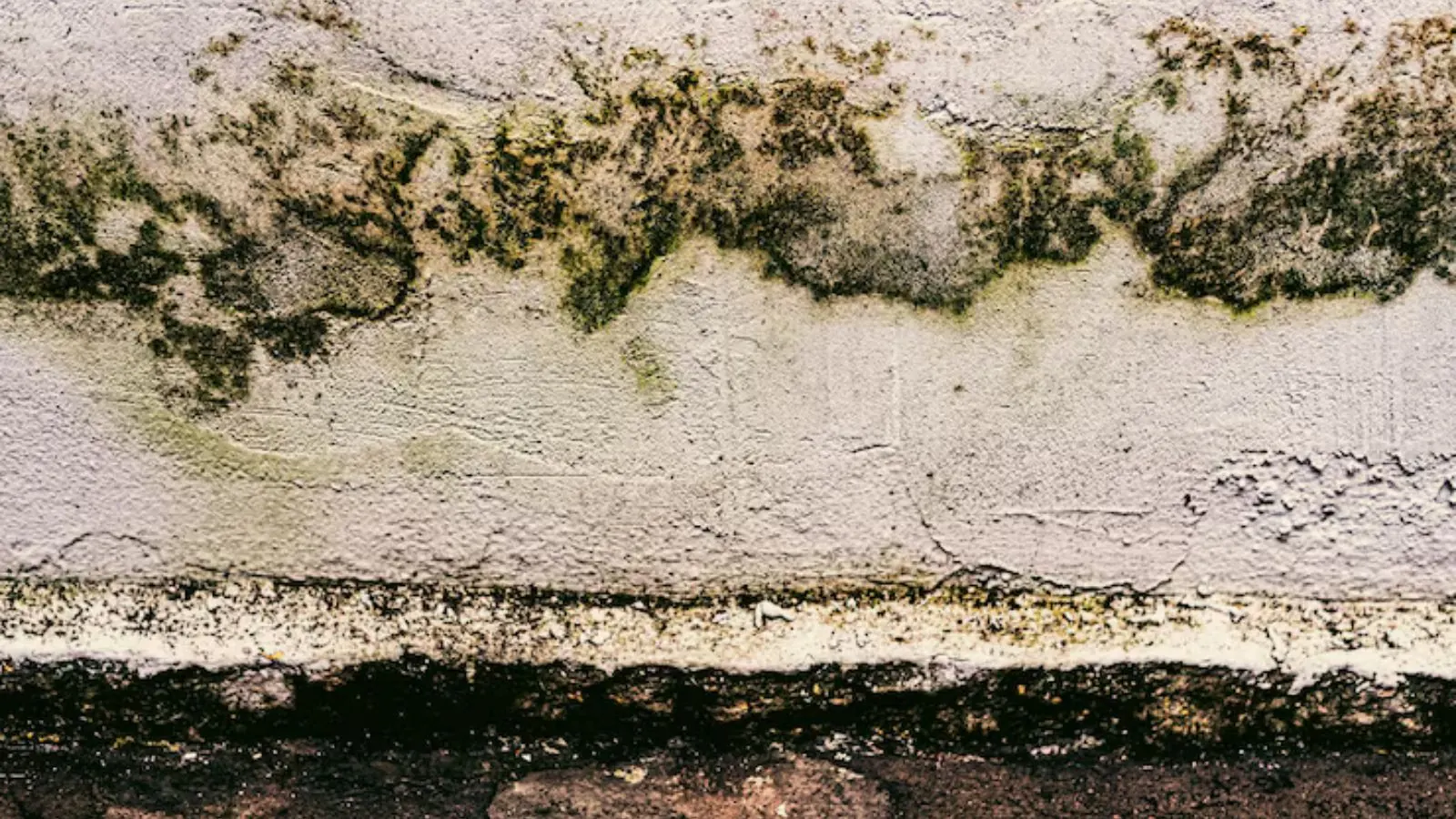
Mold in one clear definition
Mold is a type of fungus. It grows from microscopic spores that float through outdoor and indoor air all the time, and those spores settle on every surface in a house. Spores sitting on a dry surface do nothing. They wait.
Growth starts when a spore lands on something damp that it can feed on. Drywall paper, wood, ceiling tile, cardboard, dust and even the sizing in carpet backing all qualify. Within that damp patch the spores send out thread-like strands called hyphae, and the mat of those strands is what you see as a fuzzy, powdery or stained spot.
So the short answer is this: mold is a fungus that turns damp organic material into food. Remove the dampness and the growth stops spreading, though the material may stay stained or weakened.
The four things mold needs
| Ingredient | Where it comes from in a house | What changes the outcome |
|---|---|---|
| Spores | Outdoor air, shoes, pets, HVAC air | Cannot be removed from a home entirely |
| Food | Paper facing on drywall, wood, dust, fabric | Porous food sources hold growth deeper than hard ones |
| Moisture | Leaks, flooding, condensation, high humidity | The one factor a homeowner can control |
| Time and warmth | Mild indoor temperatures for days or weeks | Faster drying shortens the window |
Because spores and food are always present, moisture is the only practical lever. Every other step in this guide comes back to it.
Where mold usually shows up inside a house
The most common spots are the ones where water arrives quietly. Look behind the toilet, under the kitchen sink, around the water heater, along the bottom of exterior walls, and on the ceiling below a bathroom or roof penetration. A window frame that fogs every morning is another early sign.
Mold also hides. It grows on the back of drywall, inside a wall cavity wet from a slow supply line leak, on the underside of carpet pad, and on the top of ceiling insulation. A musty smell with no visible growth often points to one of those hidden spots.
Colors vary widely. Mold can look black, green, white, gray, brown or even orange, and color alone says nothing about the species. Do not judge a patch by its shade.
Think you have more than a small patch?
Call the 24/7 line at (943) 469-0138 and describe what you see. Scope and price are explained before work starts.
What mold can look and feel like
No single appearance defines mold, but a few patterns come up again and again in damp houses. None of them proves growth on its own.
Fuzzy or powdery spots
Often found on painted walls, grout lines and fabric. The texture can look dusty and may smear when touched, which is one reason you should not wipe it dry.
Dark speckles or stains
Small dots that spread into clusters on drywall, ceiling tile or wood trim. Water stains without growth look similar, so the surrounding dampness matters.
A musty, earthy smell
The odor comes from gases released as mold grows. A smell with no visible source usually means growth behind a surface.
Bubbling, peeling or soft material
Paint that lifts, wallpaper that bulges or drywall that feels soft are signs of moisture sitting in the material itself.
What is reasonable to handle yourself
Small, surface-level spots on hard, nonporous materials such as a tile grout line or a painted window sill are usually a cleaning task. Wear gloves, eye protection and an N95 style mask, wet the area first so spores do not lift, and fix the moisture source the same day.
The picture changes once growth covers a large area, sits on porous material like drywall or carpet, keeps returning after cleaning, or follows a water event you could not dry yourself. At that point the job stops being cleaning and becomes remediation, which means containing the area, removing affected material and drying the structure.
Professional crews work to the published ANSI/IICRC S520 standard for mold remediation. You can ask any company whether its crews follow S520 before you agree to a scope.
Mold rules in Georgia and what that means for you
The Georgia Department of Public Health indoor air page, a state agency source, says indoor air quality is not a regulated program in Georgia. It also states that mold inspection, testing and remediation have no enforceable state or federal standards. In practice that leaves the homeowner to ask questions.
Before you hire anyone, ask whether their crews follow S520, ask for the scope in writing before work starts, and ask whether your state licenses mold work for the job in front of you. For Lithia Springs addresses, the Douglas County building permits office can tell you whether a rebuild after removal needs a permit.
Questions about how mold may affect a person belong with a physician, not a restoration company or a website. Keep that conversation separate from the building work.
What testing can and cannot tell you
Air and surface tests count spores or identify types. Because spores are always in the air, a result only means something when it is compared with an outdoor sample taken at the same time. A lab number on its own does not tell you whether a home needs work.
Testing is most useful in two moments. One is before remediation, to help define where growth is and how far it has spread. The other is after remediation, to confirm that the cleaned area reads like the outdoor baseline. S520 describes how that process is meant to be structured.
A moisture meter and a thermal imaging camera often answer the first question faster than a lab. They find the wet material that is feeding the growth, and wet material is where the real problem lives.
What to do when you find a suspected patch
Four steps keep a small discovery from becoming a bigger one. Work through them in order.
Find and stop the water
Look for the leak, condensation or humidity source. Shut off the supply valve if a pipe or appliance is leaking, and run a dehumidifier in the room.
Leave it undisturbed
Do not sand, scrub dry or blast a fan across the patch. Disturbing growth sends spores into other rooms and the HVAC system.
Photograph and measure
Take photos, note the size, and check the wall with a moisture meter if you own one. Notes help any crew scope the job accurately.
Decide clean or call
Small and hard-surfaced means careful cleaning. Large, hidden, porous or recurring means a call to the 24/7 line at (943) 469-0138.
When to stop DIY and call
Call when the patch is bigger than a hand, when drywall feels soft or bowed, when a musty smell has no visible source, or when the growth followed flooding, a sewage backup or a roof leak. Questions about how mold may affect a person belong with a physician, and that conversation is separate from the building work. Keep the two apart.
A crew will set up containment with plastic sheeting, run HEPA air scrubbers under negative pressure, remove materials that cannot be cleaned, and dry the structure with air movers and dehumidifiers. That is the work described on our mold remediation page.
If the cause was a wet structure that never dried, the same crews can also handle structural drying and dehumidification, which removes the moisture that feeds growth. Crews serving Lithia Springs also reach Austell and Douglasville when the call comes from a neighboring address.
Why moisture control matters more than any product
Shelves of sprays and cleaners promise to handle mold. A surface product may lighten a stain on a hard surface, but it does not dry a wall cavity or replace a soaked section of drywall. Growth inside a porous material is a moisture problem first.
No honest source can promise that mold will stay away after cleaning, because spores are always present and any new moisture event can restart the process. What you can do is shorten the wet window and fix leaks promptly. That is the real protection.
Common Questions
Is every black spot on a wall mold?
No. Dirt, soot, water stains and some mineral deposits can look the same. Mold usually sits on a damp or recently damp surface and often has a texture. If the spot is on a wall that has had leaks or condensation, treat it as possible growth and find the moisture.
Can I just paint over mold?
Painting over it hides the spot but leaves the growth and the moisture in place. Most paint will not bond well to a damp, contaminated surface, and the stain often bleeds through. Dry and clean or remove the material first.
Does a musty smell always mean mold?
A musty smell often points to damp material, and growth is one possible cause. Look for hidden leaks, damp carpet pad or condensation. If you cannot find the source, a moisture meter reading or professional inspection can narrow it down.
Is there a state mold license in Georgia?
The Georgia Department of Public Health states that indoor air quality is not a regulated program and that mold inspection, testing and remediation have no enforceable state or federal standards. Ask any company whether its crews follow the S520 standard, and ask whether your state licenses mold work for the type of job you have.
General contractor licensing under the Georgia Secretary of State is a separate topic and applies to many construction jobs.
Do Lithia Springs homes near Sweetwater Creek face more mold risk?
Homes near the creek can see more moisture if flooding or groundwater reaches them. Douglas County describes Woodrow Wilson Park on Mt. Vernon Road as lying in the Sweetwater Creek 100-year floodplain. Check your own address on the FEMA Flood Map Service Center, and dry any water event quickly, because moisture is what mold needs.
What does S520 mean?
ANSI/IICRC S520 is the published standard for professional mold remediation. It covers assessment, containment, removal, cleaning and verification. You can ask any company whether its crews work to S520 and how they would apply it to your home.